Are 3PLs And Shippers Focusing On Different AI?
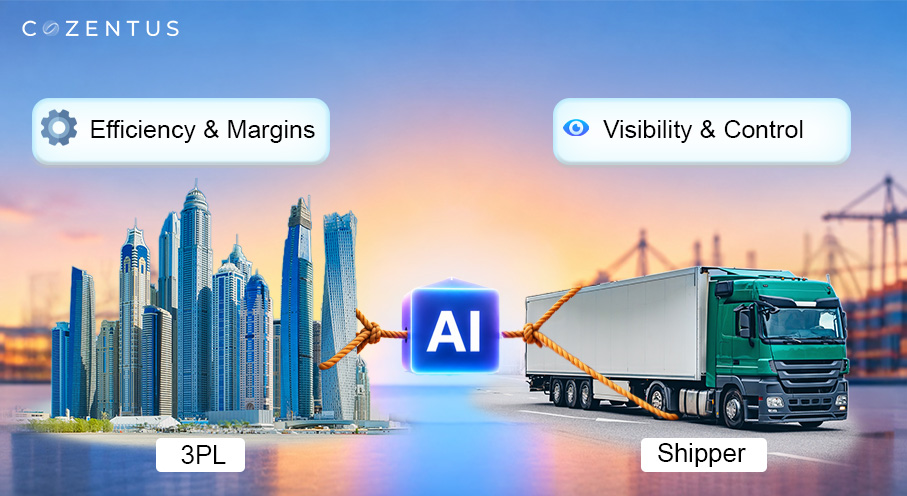
3PLs are using AI to process documents faster and reduce manual work. Shippers want AI that can predict delays, track shipments, and help them stay ahead of supply chain disruptions.
Both are investing in AI, but they have different expectations from the technology. And that difference could change what customers expect from their logistics partners.
Faster invoice processing and automated bookings are useful, but shippers also want answers before a shipment runs into trouble.
So, where are 3PLs focusing their AI investments, what do shippers actually expect, and how can logistics providers close this gap? Let's look at how 3PLs and the shipping industry have different AI priorities.
How 3PLs Are Using AI in Their Daily Operations
For most 3PLs, AI adoption starts with everyday operational challenges.
AI helps reduce this workload by automating repetitive tasks and processing large amounts of information faster.
Some common uses of AI in 3PL operations include:
- Intelligent Document Processing (IDP): Extracting shipment details from commercial invoices, bills of lading, packing lists, and purchase orders within seconds.
- Freight Audit Automation: Checking freight invoices against agreed rates, contracts, and shipment records to identify incorrect charges. This too, within seconds.
- Booking Automation: Processing booking requests and reducing manual data entry.
- Invoice Reconciliation: Comparing invoice details with purchase orders and shipment records to identify discrepancies.
- Automated Data Entry: Moving information between emails, spreadsheets, and logistics management systems.
For a logistics provider managing hundreds or thousands of shipments, these improvements can make daily operations much easier.
However, there is another side to AI adoption.
While 3PLs are focusing on making their internal processes faster, shippers are looking for something more from the technology.
What Shippers Actually Want from AI in Logistics
Shippers have different priorities. They need to know where their shipments are, whether deliveries will arrive on time, and whether something could disrupt their supply chain.
This is why shippers are more interested in AI applications that can provide better visibility and predict potential problems.
Some important applications include:
- Predictive ETA: Using shipment history, carrier updates, traffic, and weather data to estimate more accurate arrival times.
- Shipment Visibility: Bringing shipment location and status information together across different carriers, transport modes, and systems.
- Predictive Analytics: Analysing historical and real-time data to identify possible delays, capacity problems, and changing shipment patterns.
- Risk Monitoring: Identifying potential disruptions such as port congestion, severe weather, and route interruptions.
- Demand Forecasting: Analysing demand patterns to help businesses plan inventory, transportation capacity, and future requirements.
Looking for Custom AI Solutions?
The Growing AI Gap Between 3PLs and Shippers
The 2025 Third-Party Logistics Study by NTT DATA, Penske, and Penn State University highlights some key differences between the AI priorities of 3PLs and shippers.
For example, 33% of shippers were looking for AI implementations related to supply planning and demand forecasting, compared with 19% of 3PLs planning implementations in that area.
This shows that shippers and logistics providers can have different priorities even when they are investing in the same technology.
Think about it from a customer's perspective. A 3PL might invest in AI to reduce the time spent processing freight invoices. That is useful. But the shipper might be more concerned about knowing whether a shipment will arrive late and how that delay could affect its warehouse or production schedule.
Both problems matter, but they deliver different types of value.
If 3PLs focus only on internal automation, they could miss opportunities to improve the service their customers actually experience.
What Should 3PLs Do Differently with Their AI Strategy?
3PLs do not need to stop investing in document processing, invoice automation, or other back-office applications. These tools are important for improving efficiency and controlling costs.
But their AI strategy should also address customer-facing challenges.
Here are four areas worth focusing on:
1. Connect Data Across Logistics Systems
Predictive AI needs reliable data. 3PLs should bring information together from Transportation Management Systems (TMS), Warehouse Management Systems (WMS), Enterprise Resource Planning (ERP) platforms, carrier systems, and GPS tracking solutions.
When information is spread across different systems, getting a complete picture of shipment operations becomes difficult. Better data integration helps AI generate more useful and reliable insights.
2. Invest in Predictive Shipment Visibility
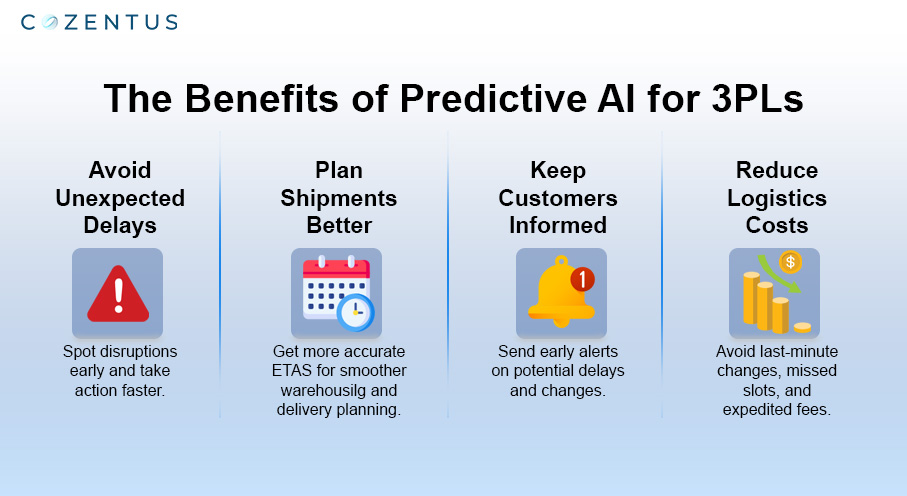
Shipment tracking should provide more than location updates. 3PLs should look at predictive ETAs, automated exception detection, and early warnings for potential delays.
This helps customers understand possible problems before they affect delivery schedules.
3. Turn Logistics Data Into Useful Insights
Collecting shipment data is only part of the job. 3PLs should also help customers understand what that data means.
AI-powered dashboards and analytics can help shippers monitor delivery performance, identify recurring delays, compare carrier performance, and understand logistics costs.
4. Combine AI with Human Expertise
AI can analyse data, identify risks, and recommend possible actions. But logistics operations still involve situations that need human judgement, coordination, and experience.
3PLs should use AI to support their operations teams, giving them better information to make decisions and handle exceptions.
The focus should be on using AI across the entire logistics process, from document handling and freight auditing to shipment visibility and customer decision-making.
FAQs
1. How is AI used in the logistics industry?
Ans: AI is used in logistics for document processing, freight auditing, booking automation, shipment tracking, route optimisation, demand forecasting, and risk monitoring. It helps logistics companies reduce manual work, improve accuracy, and make better operational decisions.
2. How can AI improve supply chain visibility?
Ans: AI can analyse shipment data, carrier updates, GPS information, weather conditions, and traffic patterns to provide better shipment visibility. It can also predict potential delays and send early alerts so logistics teams have more time to respond.
3. Why should 3PL companies invest in AI?
Ans: AI helps 3PLs improve operational efficiency, reduce processing costs, and provide better customer service. Investing in predictive analytics, shipment visibility, and automated exception management can also help them meet changing shipper expectations and remain competitive.