Why 3PL Providers Lose Customers Despite Meeting SLAs
A 3PL provider might believe everything is going well because shipments are moving and contractual SLAs are being met. But is the shipper seeing it the same way?
Behind those performance reports, operations teams could be chasing updates, handling customer complaints, and dealing with the same problems – again and again. The relationship might look stable, but the confidence would be slowly fading.
With capacity shortages, port congestion, and delivery delays becoming more common, 3PLs have learned to manage them better. But managing them doesn't always mean they are meeting the shipper's expectations.
So, manageable for whom?
This blog looks at the growing perception gap between shippers and 3PLs, why it puts long-term contracts at risk, and how both sides can address it.
3PL Performance: Two Very Different Perspectives
Consider a shipment between two distribution centres. A carrier capacity issue causes a delay. The 3PL arranges an alternative carrier, updates the delivery schedule and eventually closes the exception.
But on the shipper's side, the planning team rearranges warehouse schedules, customer service handles complaints, procurement investigates additional costs, and the operations manager spends time chasing updates.
The 3PL sees a resolved exception. The shipper sees additional work, extra costs, and a missed commitment.
| 3PL's Performance View | Shipper's Actual Experience |
|---|---|
| Exception successfully closed | Time spent chasing updates |
| Revised delivery completed | Original commitment missed |
| Alternative carrier arranged | Additional operational costs |
| Customer informed | Customer still dissatisfied |
Standard Key Performance Indicators (KPIs) and SLAs may capture the first perspective without showing the complete operational impact.
The Warning Signs of a Bad Relationship
A perception gap doesn’t develop overnight. It starts with small problems that keep happening and slowly become part of everyday operations. Over time, these issues can affect how shippers see their 3PL.
- More Follow-Ups: Shipper teams spend more time chasing shipment updates through emails and calls. They often have to contact the 3PL several times to get accurate delivery dates, shipment status, and updates on delays.
- Manual Workarounds: Employees start maintaining separate spreadsheets, contacting carriers directly, and tracking shipments on their own. These extra steps help keep operations running but increase manual work and take time away from other important tasks.
- Routine Performance Reviews: Quarterly Business Reviews (QBRs) become focused on presenting performance numbers and showing SLA compliance. The same problems keep coming up, but there is very little discussion about why they happen or how to prevent them.
- Less Trust: Shippers start comparing other 3PL providers. They start checking market rates and looking at alternative services. They may continue working with their current provider, but they are already considering other options in their minds.
Each of these problems may seem small on its own. But when they keep happening over and over again, the shipper's confidence in the 3PL starts to fall apart. The provider may still believe the relationship is healthy, while the customer is already thinking about an exit.
Looking for Custom AI Solutions?
What Can Shippers and 3PLs Do Before It’s Late?
Meeting contractual SLAs is important, but both parties need to understand how service failures affect daily operations, costs, and customer satisfaction.
3PL performance reviews should not only be about standard delivery numbers. Here’s where you can improve:
- Original Vs Revised Delivery: Check whether shipments meet the original delivery commitment, not just the revised ETA. Delays can still affect the shipper's plans and customer commitments.
- Exception Frequency: Identify repeated problems by carrier, route, and shipment type to understand where things are going wrong.
- Resolution Effort: Check how much time teams spend resolving shipment issues. Repeated calls and manual follow-ups may point to gaps in the 3PL's processes.
- Communication Quality: Review how quickly the 3PL shares accurate updates. Shippers should not have to keep chasing basic shipment information.
- Cost Impact: Track additional transportation, storage, detention and demurrage costs caused by service failures.
- Customer Experience: Understand how delays and missed commitments affect the shipper's customers and lead to complaints.
Frontline employees should also be part of these reviews. They handle shipments daily and often know which problems keep coming back.
How AI Shipment Visibility Improves 3PL Performance
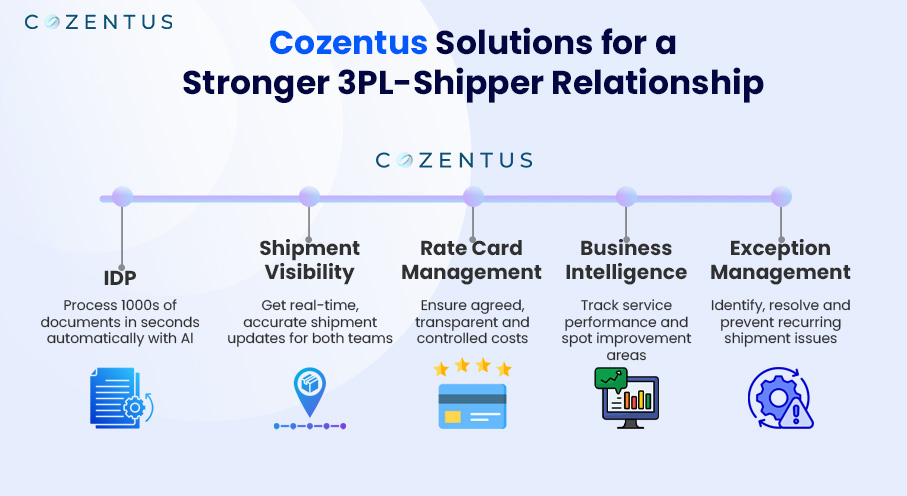
AI-powered shipment visibility helps 3PLs and shippers get a clearer view of shipment movements, delays, and operational issues. It brings data from Transportation Management Systems (TMS), carrier platforms, and ERP systems into one place. This makes shipment information easier to track and analyse.
Using real-time tracking and historical data, AI can help teams:
- Predict delays: Identify potential delivery delays and send early alerts.
- Detect exceptions: Flag missed milestones and unusual shipment movements.
- Improve ETA accuracy: Provide more reliable delivery estimates using live and historical data.
- Monitor performance: Track SLA compliance, recurring delays, and carrier performance.
This helps shippers reduce manual follow-ups and improve operational control, while 3PLs can resolve issues faster, improve service performance, and build stronger customer relationships.
The Next Contract May Already Be in Question
Most 3PLs are prepared to deal with the next disruption. They have the teams, processes, and technology to keep freight moving when something goes wrong.
But how many are paying attention to the difference between their own performance assessment and the shipper's actual experience?
A relationship can survive late shipments and difficult market conditions. But it’s harder to survive when both sides stop agreeing on what good service looks like.
The biggest warning sign is not a failed SLA. It’s a customer who has stopped complaining because they have already started looking elsewhere.
FAQs
1. How do you measure the performance of a 3PL provider?
Ans: 3PL performance is measured using KPIs such as on-time delivery, order accuracy, transit time, exception resolution time and cost per shipment. Communication and customer experience should also be considered.
2. Why do 3PL providers lose customers?
Ans: Common reasons include poor communication, limited shipment visibility, recurring service failures, unexpected costs and unresolved operational problems, even when contractual SLAs are met.
3. How can shippers improve their relationship with a 3PL provider?
Ans: Shippers can establish clear SLAs, share accurate operational data, conduct regular performance reviews and involve frontline teams in identifying recurring problems.