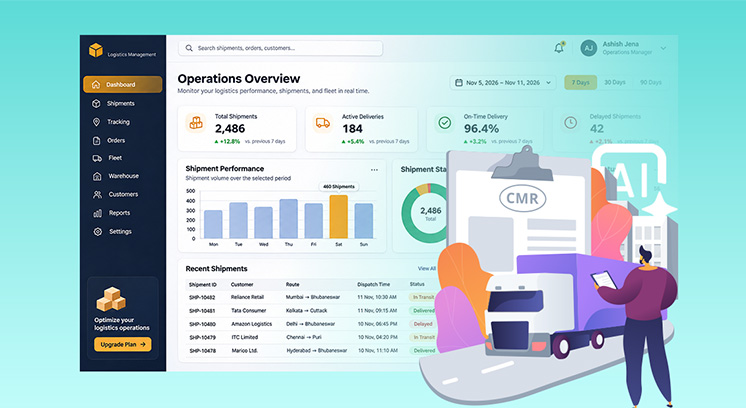
Make Shipment Visibility More Effective with AI and Agents
You can track every shipment, monitor every milestone and receive real-time alerts. But what happens when a shipment is delayed?
Someone still has to check the carrier update, understand the impact, contact the customer, and decide what to do next. This is where many logistics operations lose valuable time.
After years of investing in shipment visibility platforms, freight forwarders and 3PLs still deal with manual follow-ups, late responses, and too many alerts. With AI and AI agents, you can predict shipment delays, identify high-priority exceptions, collect relevant information, and automate routine actions.
In this blog, we'll look at how AI and agents can make shipment visibility more useful, reduce manual work, improve exception management and help operations teams make faster decisions while keeping people in control of critical actions.
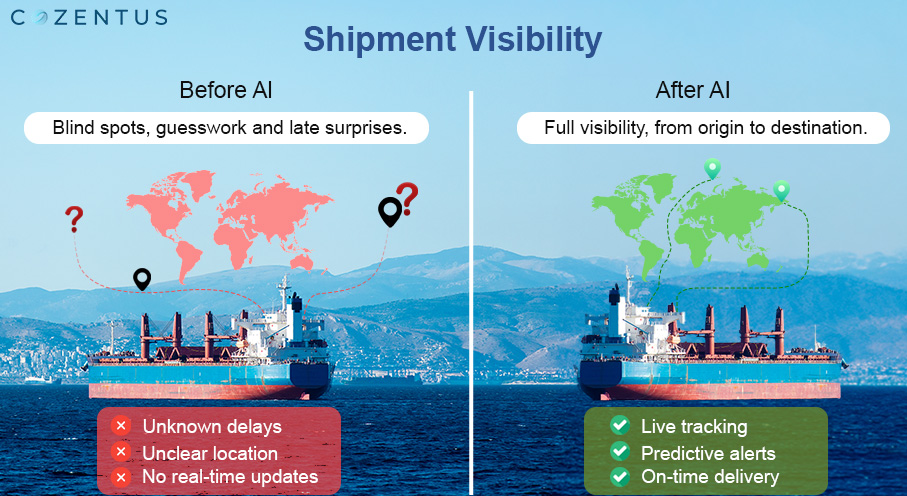
Bad Shipment Visibility Has Hidden Costs
Most shipment visibility platforms collect data from carriers, GPS devices, ports, and Transport Management Systems (TMS), giving operations teams a central view of shipment movements and delivery milestones.
But seeing a problem doesn't mean it gets resolved quickly.
Imagine a container shipment from Shanghai to Rotterdam. The vessel is delayed by three days, and the platform updates its Estimated Time of Arrival (ETA). The operations team still needs to contact the carrier, check the latest updates, and inform the customer. Now do the same thing for hundreds of shipments - every day.
Seems a lot, doesn’t it?
These delays can also affect other parts of the business:
- Missed deliveries: Customers don't receive cargo as planned.
- Higher costs: Delays can lead to additional demurrage, detention and storage charges.
- Poor resource planning: Warehouses, trucks and labour need to be rescheduled.
- More manual work: Teams spend hours chasing carriers and updating customers.
- Customer dissatisfaction: Late deliveries and poor communication affect customer relationships.
For freight forwarders and 3PLs, these issues can increase operational costs, reduce efficiency, and affect profitability. AI-powered shipment visibility helps identify and prioritise exceptions early. The longer an exception goes unresolved, the greater its impact.
Looking for Custom AI Solutions?
5 Ways AI Improves Shipment Visibility
AI can help logistics companies analyse historical shipment movements, carrier performance, route information, and real-time updates to identify patterns, highlight problems, and offer logical solutions.
Here are five practical ways AI can improve shipment visibility:
1. Predictive ETA and Delay Prediction
AI can analyse historical transit times, carrier performance, and current shipment movements to estimate arrival times more accurately. It can also identify shipments that are likely to miss their planned delivery dates, giving teams more time to prepare.
2. Intelligent Exception Management
Instead of sending alerts for every shipment update, AI can help identify and prioritise exceptions based on their urgency and business impact. For example, a container whose free time is going to end or a shipment that’s going to miss a customer deadline can receive higher priority.
3. Shipment Risk Monitoring
AI can analyse shipment data and operational patterns to identify potential risks. This could include unusual transit delays, port congestion, poor carrier performance, or unexpected natural events.
4. Automated Carrier Follow-ups
When expected shipment updates are missing, workflow automation can trigger follow-up emails or notifications to carriers. This reduces the time teams spend chasing routine updates and collecting shipment information.
5. AI-Powered Decision Support
AI can collect relevant shipment details, identify the possible impact of an exception, and provide useful information to help teams decide what to do next. It’s like having an expert personal assistant.
How AI Agents Help Logistics Visibility
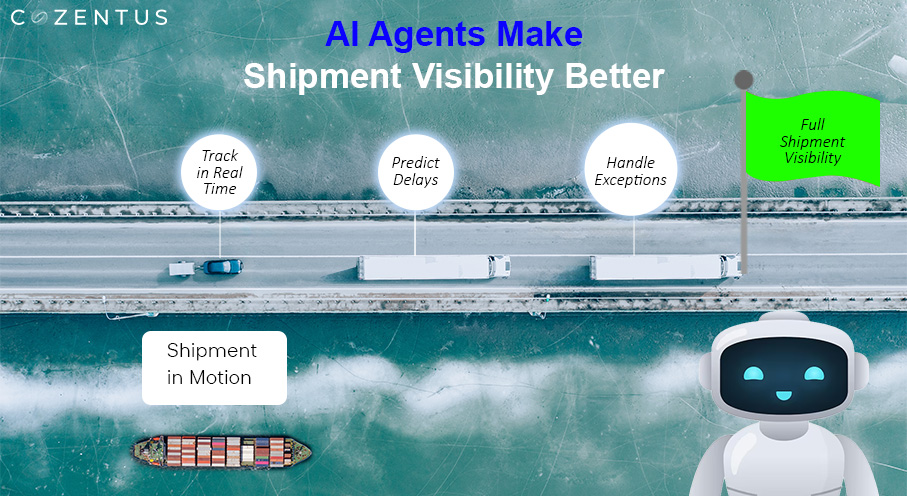
AI agents help logistics teams automate multi-step tasks, manage shipment exceptions and reduce manual follow-ups. They can collect shipment data, check carrier updates, identify potential delays, and trigger the next steps within a defined workflow.
This helps operations teams respond faster, spend less time on repetitive tasks and focus on decisions that need human judgement.
For example, when a shipment delay is detected, an AI agent could:
- Retrieve the latest carrier update.
- Identify the affected booking and customer.
- Check the revised ETA and delivery commitment.
- Assess the potential operational impact.
- Notify the responsible operations team.
- Prepare a customer update for review.
This reduces the need for employees to switch between multiple systems and manually collect information.
AI agents can also work with connected business applications and approved workflows to complete routine tasks. For example, an agent could retrieve shipment details from a TMS, check carrier updates, and then create a follow-up task for the responsible team.
However, for actions like alternative routing, additional freight costs or changes to customer commitments, it is still best to use humans.
Critical Decisions Still Need Humans
Human decisions are essential in logistics when shipment exceptions involve additional costs, alternative routes, customer commitments, or commercial agreements.
AI and automation can identify problems, analyse their impact and suggest possible actions, but experienced logistics professionals need to evaluate the options and make the final call. This combination helps teams automate routine work while keeping control over important operational decisions.
Consider a container that is likely to incur demurrage charges. An AI-powered system can monitor its free time, calculate potential charges, and alert the responsible team. It can also provide relevant shipment information and suggest possible next steps.
But deciding whether to request additional free time, arrange an alternative movement or accept the charges requires an understanding of customer priorities, commercial agreements and operational constraints.
The best approach is to let technology handle monitoring, data collection, and routine follow-ups while people focus on decisions that need experience and judgement.
This combo helps operations teams spend less time managing alerts and more time solving actual problems.
Your Visibility System Needs These Things
Making shipment visibility more effective requires more than adding another tracking platform or dashboard. Companies need to make sure their systems can turn shipment information into useful actions.
Here are five areas worth prioritising:
- Connected Data: Integrate carrier updates, TMS, Warehouse Management Systems (WMS), and Enterprise Resource Planning (ERP) systems.
- Reliable Data: Maintain accurate shipment milestones, timestamps, carrier updates, and reference details.
- Intelligent Alerts: Prioritise exceptions based on urgency and business impact.
- Workflow Automation: Automate routine notifications, carrier follow-ups, and operational tasks.
- Human Oversight: Keep experienced teams involved in decisions that affect costs and customer commitments.
Getting these areas right can help freight forwarders and 3PLs improve response times, reduce manual work, control avoidable costs, and provide better customer service.
FAQs
1. What is AI-powered shipment tracking?
Ans: AI-powered shipment tracking uses artificial intelligence to analyse shipment movements, identify unusual events and predict potential disruptions. It helps logistics teams make better decisions using shipment data.
2. What is predictive ETA in logistics?
Ans: Predictive ETA uses historical shipment data, carrier performance, route information and current shipment movements to estimate when cargo is likely to arrive.
3. How does exception management help freight forwarders?
Ans: Exception management helps freight forwarders identify and prioritise shipment delays, missed milestones and other disruptions. It allows teams to focus on important issues, respond faster and reduce manual monitoring.