Scope 3 Emissions Data Infrastructure Every Freight Forwarder Needs
A question that wasn't part of the customer conversation a few years ago is being asked by customers to freight forwarders:
“Can you provide the Scope 3 emissions for this shipment?”
The request is being driven by growing sustainability commitments. Manufacturers, retailers, and global brands are expected to measure emissions across their value chains, and transportation is often one of the largest contributors. As a result, freight forwarders are now expected to provide emissions data along with shipment updates and delivery information.
Many businesses see this as another reporting requirement. But it isn't. Scope 3 reporting is exposing a much bigger operational challenge. The issue is not the emissions calculation itself. It's the ability to collect accurate shipment data from multiple systems, carriers, and documents.
Freight forwarders that solve this problem will not only simplify Scope 3 reporting. They'll also strengthen shipment visibility, customer reporting, and everyday operational performance.
What is Scope 3 Reporting?
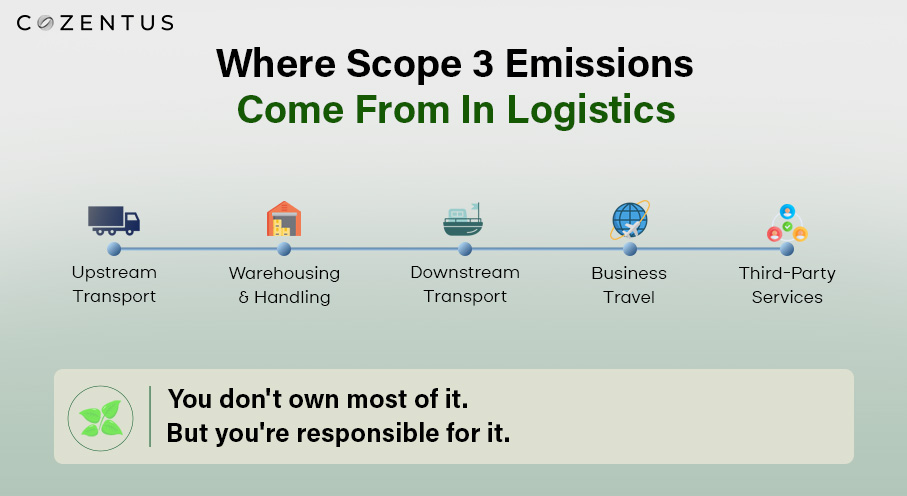
Scope 3 reporting measures the indirect greenhouse gas emissions generated across a company's value chain. In logistics, it mainly covers emissions from transporting, storing, and handling goods by third-party providers, helping businesses understand, report, and reduce their overall environmental impact.
Accurate Scope 3 emissions reporting depends on information that freight forwarders already collect every day. Every shipment generates operational data that can be used to estimate transport emissions, including:
- Shipment origin and destination
- Transport mode
- Carrier details
- Shipment weight or volume
- Distance travelled
- Pickup and delivery milestones
- Bills of lading, commercial invoices, and packing lists
- Proof of delivery (PoD)
None of this information is new. It already exists somewhere within the business.
The challenge is that it doesn’t exist in one place. Booking information may sit inside the Transport Management System (TMS). Carrier milestones arrive through EDI messages, APIs, or carrier portals. And so on.
The biggest challenges usually include:
- Shipment information is spread across multiple applications
- Different data formats received from carriers
- Missing shipment milestones
- Manual document handling
- Duplicate or inconsistent shipment records
McKinsey & Company says that organizations often struggle with ESG reporting because available data is insufficient or difficult to use. The same challenge exists in freight forwarding, where shipment information is frequently scattered across multiple systems instead of being instantly available in one place.
How Poor Logistics Data Affects Operations
Scope 3 reporting is only one process that is affected by disconnected shipment data. The same gaps also affect customer service, finance, operations, and reporting every day.
You can see the business impact very quickly:
- Customer enquiries take longer to answer.
- Shipment updates become inconsistent.
- Freight invoice validation requires more manual effort.
- Operational reports take longer to prepare.
- Teams spend more time checking information than improving performance.
These workarounds gradually become part of everyday operations. Teams create spreadsheets, maintain manual trackers, or rely on email chains because they have no easier way to bring information together. While these methods keep freight moving, they also increase operational costs and make reporting more slower and less reliable.
Scope 3 reporting does not create these problems. It simply exposes them because customers now expect emissions data with the same accuracy and speed as shipment updates.
Looking for Custom AI Solutions?
Why Carbon Reporting Tools Can't Fix Bad Data
When customers start requesting emissions data, many businesses assume they need another reporting platform. While carbon reporting software can automate calculations, it cannot solve problems caused by incomplete or inconsistent shipment information.
If shipment weights are missing, transport modes are incorrect, carrier milestones are incomplete, or shipping documents still require manual checks, the reporting process will continue to rely on manual work regardless of which platform is used.
Instead of solving each challenge separately, leading freight forwarders are improving how operational information moves across the business. They focus on making shipment data complete, consistent, and available wherever it is needed.
The goal is not to replace every existing system. The goal is to ensure those systems work together and provide reliable information to every team.
How Leading Freight Forwarders Are Preparing
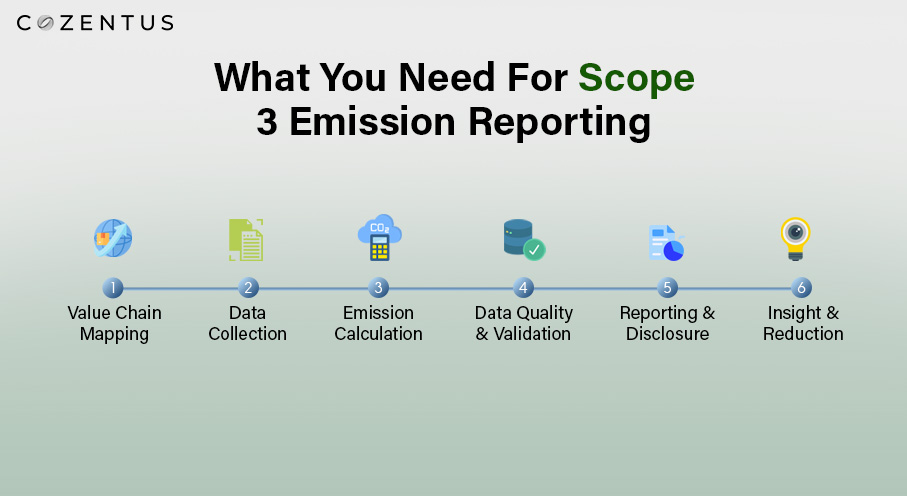
Businesses that are making progress with Scope 3 reporting are focusing first on the basics. Rather than introducing another reporting layer, they are improving the way shipment information is captured, shared, and maintained across the organisation.
In practice, that means:
- Connecting booking, shipment, and invoice information
- Bringing carrier milestones into operational workflows
- Reducing manual data entry and reconciliation
- Standardising shipment records across systems
- Making trusted information available to every department
Once these fundamentals are in place, you get benefits more than just sustainability reporting. Customer service teams respond faster because shipment information is easier to find. Finance spends less time validating invoices. Managers receive more reliable operational reports. Scope 3 reporting becomes another business process rather than another manual task.
Freight Forwarders Should Own Their Software
At Cozentus, we help freight forwarders build software around the way their operations actually work. Instead of forcing businesses to adapt to rigid products, we develop technology that fits existing processes and integrates with the systems they already use.
Our work typically focuses on helping logistics businesses:
- Connect operational systems
- Automate document-driven processes
- Reduce manual data handling
- Improve shipment visibility
- Build software they fully own
Ownership is an important part of our approach. Our clients own everything we build, which means there are no licensing restrictions, no dependency on us to make future changes, and no limits on how their technology evolves as the business grows.
Our approach is not the right fit for every organization. If an off-the-shelf product already meets your operational needs, it may be the best choice. But if your business depends on specialised workflows, multiple customer requirements, and complex integrations, bespoke software provides greater flexibility over the long term.
Reliable Scope 3 reporting starts with reliable shipment data. The freight forwarders that strengthen their operational systems today will be the ones customers trust tomorrow.
Frequently Asked Questions
Q: What is Scope 3 emissions data in logistics?
A: Scope 3 emissions data measures the indirect greenhouse gas emissions generated across a company's value chain. In logistics, this mainly includes emissions produced during the transportation and handling of goods by third-party logistics providers and carriers.
Q:Why are customers asking freight forwarders for Scope 3 emissions data?
A: Many manufacturers, retailers, and global brands now report emissions across their supply chains. They rely on freight forwarders to provide accurate shipment information so transportation emissions can be calculated and included in their sustainability reports.
Q: How can freight forwarders improve Scope 3 reporting?
A: The first step is improving the quality and consistency of shipment data. Connecting operational systems, reducing manual data handling, and maintaining accurate shipment records make emissions reporting faster, more reliable, and easier to scale.