Visibility Has Become the Starting Point
If a freight forwarder could show where a shipment was, whether a container had moved, or when a delivery might arrive, that was a competitive advantage.
Now this has changed.
In 2026, most serious logistics operations already have some form of shipment tracking. They can see vessel movements, container locations, estimated arrival times, delays, and exceptions. Customers expect this information too.
The real gap is what happens after the system identifies a problem.
A dashboard turning red does not reduce costs. Knowing a shipment is delayed does not protect the customer. Or seeing a missed milestone does not fix the exception.
The next advantage is “actionable logistics visibility”. This means companies need technology that can detect an issue, understand its impact, and trigger the right action before the problem becomes expensive.
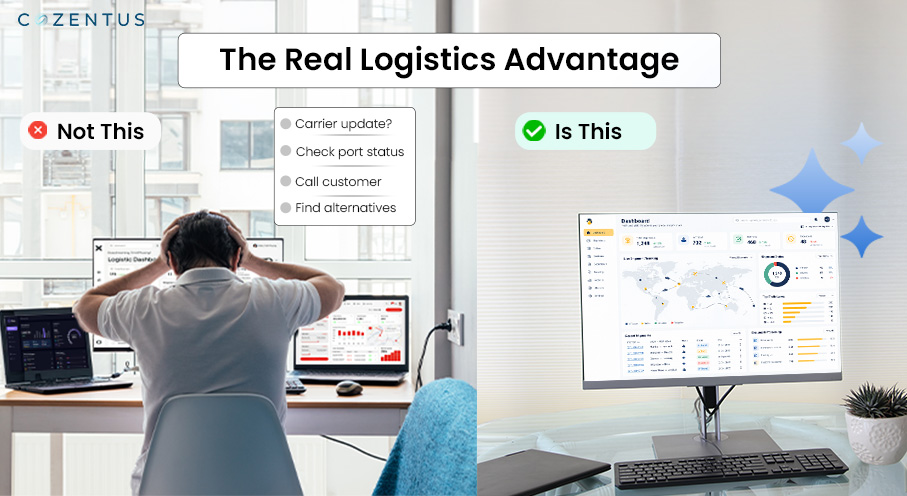
Real-Time Visibility Is Now Table Stakes
A few years ago, real-time shipment tracking could set a logistics provider apart. Today, customers expect it. Freight forwarders, carriers, 3PLs, and shippers can already connect data from TMS, ERP, WMS, carrier APIs, EDI, GPS, IoT, ports, and terminals to track shipments and monitor ETAs.
The technology can tell teams when:
- A vessel is delayed
- A shipment may miss its SLA
- An ETA changes
- A container faces demurrage or detention risk
- A delivery milestone is missed
- The problem starts after the alert.
Someone still has to assess the impact, check alternatives, contact the carrier, update the customer, and change the plan. That manual response can take hours, especially when teams are managing hundreds of shipments across multiple carriers, routes, and systems.
Visibility tells you what happened. The real advantage comes from what happens next.
The Problem with Another Red Dashboard
Imagine a shipment from Shanghai to Rotterdam.
The system detects that the vessel is running 18 hours late. The dashboard turns red. The operations team receives an alert.
Now what?
Someone still needs to check the customer's delivery commitment. They may need to review the next available vessel, check downstream transport capacity, contact the carrier, update the customer and change the delivery plan.
If all of those actions happen manually, the operation is still slow. The technology successfully identified the problem. The people still have to coordinate the response.
This is where many logistics operations lose the value created by visibility platforms.
Detection is only the first step.
From Exception Alerts to Automated Action
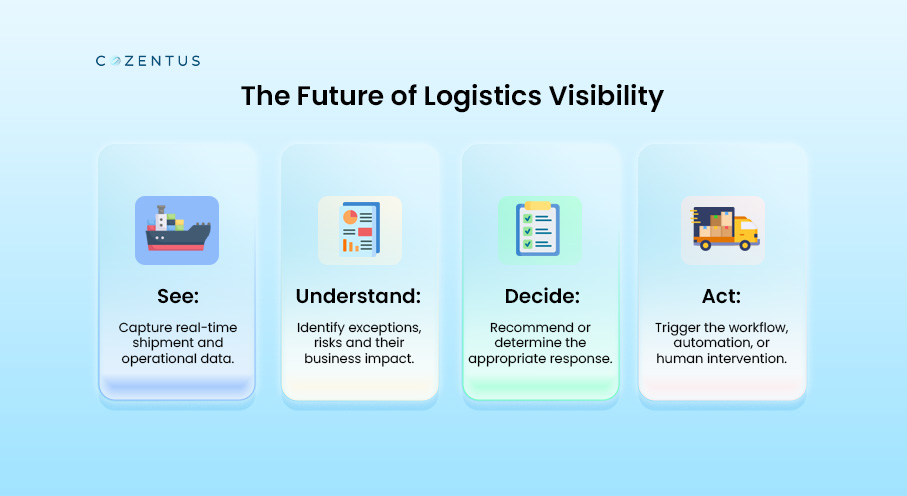
A delay alert is only the starting point. Modern AI logistics technology can assess the situation, recommend a response, and trigger workflows that reduce manual intervention.
An exception could be:
- A vessel delay that threatens a delivery SLA
- A container approaching demurrage
- A missed pickup milestone
- A carrier failing to confirm a booking
- A sudden route disruption
- A shipment likely to miss a customer commitment
- A truck arriving late at a warehouse
- A change in ETA that affects downstream transportation
The system should connect the exception to the operational decision.
For example:
Delay detected → customer SLA at risk → alternative route identified → carrier capacity checked → shipment re-tendered → customer notified.
The exact workflow will vary by operation. The principle remains the same. The real value comes from shortening the distance between knowing and doing.
Looking for Custom AI Solutions?
What Actionable Visibility Looks Like
Actionable visibility combines real-time data, business rules, analytics, and automation.
A modern logistics platform can use shipment data to determine what requires attention and what can be handled automatically.
For example, an AI-powered system could identify that a delayed container is likely to miss its delivery window. It could then check available transport options and flag the most suitable response for an operations team.
Depending on the workflow, automation could trigger:
- Carrier communication
- Rebooking or re-tendering
- Customer notifications
- Transport rescheduling
- Escalation to an operations manager
- SLA alerts
- Documentation requests
- Demurrage risk alerts
This does not mean every logistics decision should be automated.
Some decisions need human judgement. The technology should handle repetitive actions and give operators the information they need when a decision actually requires them.
AI Can Make Visibility More Useful
Traditional visibility systems largely answer questions such as:
- Where is my shipment?
AI-enabled systems can help answer more operational questions:
- Which shipments are likely to be delayed?
- Which delays will affect customer commitments?
- Which exceptions need attention first?
- What action could reduce the impact?
This is where technologies such as machine learning, predictive analytics, AI agents, and intelligent document processing (IDP) can benefit logistics companies a lot.
For example, predictive ETA models can combine historical shipment data, carrier performance, route information, and current events to identify potential delays earlier.
An AI agent can then support the workflow by gathering relevant information, preparing an action or triggering an approved process.
The important part is the connection between prediction and execution.
Visibility Is the Beginning - Not the Finish Line
That is a good thing. Better data gives logistics teams better control over their operations. But the competitive advantage is moving further downstream.
The companies that create more value from visibility will be the ones that connect data to decisions and decisions to execution.
A dashboard showing a delayed shipment is useful. A system that detects the delay, understands the business impact and helps resolve it before the customer feels it is far more valuable.
For logistics in 2026 and beyond, the question is not: “Can you see the problem?”
Most companies can.
It’s: “How fast can you act on it?”
FAQs
1. What is real-time visibility in logistics?
A: Real-time logistics visibility provides current information about shipments, containers, vehicles and other supply chain activities. It can combine data from TMS, ERP, WMS, carrier APIs, EDI, GPS and other systems to provide shipment status, ETA and exception information.
2. What is the difference between shipment visibility and predictive logistics?
A: Shipment visibility shows what is happening with a shipment now. Predictive logistics uses historical and real-time data to estimate what could happen next, such as a potential delay, ETA change or service failure. Predictive systems can help teams take action before an exception occurs.
3. How can AI improve logistics visibility?
A: AI can analyze large volumes of shipment and operational data to identify patterns, predict risks, and prioritize exceptions. When connected with workflow automation, AI can also support actions such as alerts, carrier communication, rebooking, escalation and customer notifications. Human approval can remain part of workflows where judgement is required.