Shipment Visibility in Freight Forwarding: Why Automation Matters
Freight forwarding is still built on relationships. Customers still value teams that understand their business, solve problems quickly and take ownership when things don't go according to plan. But customer expectations have quietly changed.
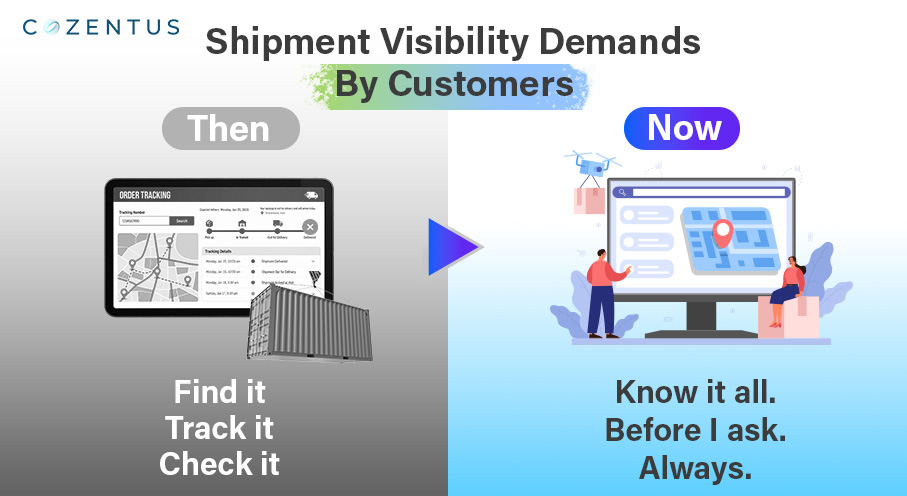
Today, enterprise shippers expect information to move as smoothly as the freight itself. They don't want shipment updates to depend on emails, documents that are scattered across different inboxes or delays being discovered only after someone calls. They expect timely updates, easy access to shipment information and clear communication throughout the entire journey. For many businesses, that's not a competitive advantage anymore - it's the minimum expectation.
In this blog, you'll learn why technology capability is becoming an important buying criterion for enterprise shippers, why customer portals alone don't solve the problem, and what leading freight forwarders are doing differently to deliver a smoother, more connected customer experience.
The New Buying Criteria for Freight Forwarders
Most of the freight forwarders still believe they're competing on rates, transit times and carrier relationships. Those things are still important, but they're not enough to separate an experienced provider from another.
When several forwarders can move freight reliably, buyers start evaluating what the relationship will look like once operations begin. That's why technology capability is now in almost every enterprise tender.
The typical discussions now include:
- How will shipment updates be shared?
- Can milestones integrate with our ERP or TMS?
- How are the delays communicated?
- Can our teams access shipping documents without calling customer service?
- What happens when an exception occurs outside business hours?
None of these questions is asking whether you can move freight. They already assume you can. Instead, they're checking how much effort their own teams will need to put into managing the relationship.
Supply chain leaders still continue to prioritise end-to-end visibility and digital collaboration because they reduce operational friction and improve responsiveness. That expectation has also trickled down to logistics providers. Customers now expect the same level of transparency from their freight forwarder that they receive from other parts of their supply chain.
Looking for Custom AI Solutions?
Visibility Isn’t the Problem. Information Flow Is
Most of the modern freight forwarders don't really have a visibility problem. They have the problem of how information flows in their systems.
When customer updates are delayed or inconsistent, the first instinct is usually to invest in another customer portal or shipment tracking platform. Those tools do add value, but they don’t usually fix the root cause.
The real challenge is what happens behind the scenes. Shipment milestones come from multiple carriers, documents arrive through email, customer service checks several systems before replying, and operations teams manually compare information because different applications don't always show the same status.
A typical shipment update often looks like this:
- Carrier sends a milestone update.
- Operations verifies the shipment status.
- Customer service updates a spreadsheet or portal.
- The customer receives an email.
- The next shipment update repeats the same process.
The technology isn't the problem. The problem is that the processes are disconnected. That's why two freight forwarders using similar software can deliver completely different customer experiences. One connects its TMS, carrier systems, customer portal, and internal workflows so information moves automatically. The other still depends on people to move information from one system to another.
Customers never see the complexity behind the operation. They only notice whether the shipment information is accurate, consistent, and arrives on time. That’s why freight forwarders now need to automate as much as they can with AI and AI Agents.
Build Logistics Software Around Your Operations
As operations grow, so does the technology stack. A TMS, carrier systems, customer portals, finance applications, emails, and spreadsheets all become part of the process. When these systems aren't connected, teams spend their valuable time chasing information instead of moving shipments.
At Cozentus, we start by understanding how your operation works today. Then we build software around your workflows and connect the systems you already rely on.
We help you:
- Connect TMS, carrier, customer, and finance systems
- Automate repetitive workflows using AI and AI Agents
- Eliminate duplicate data entry and manual handoffs
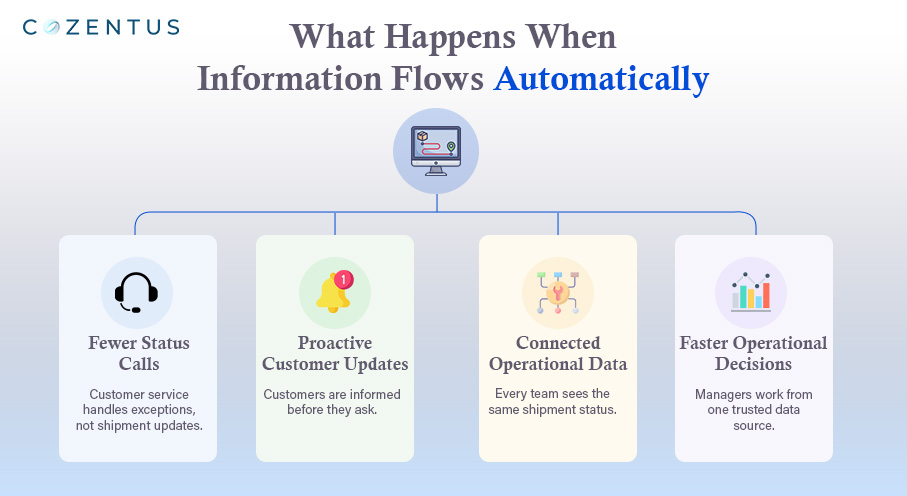
- Create a single, trusted source of operational data
- Deliver the right shipment information to the right people automatically
- Every solution is designed around your business, not around a generic product.
Unlike many software platforms, the solution belongs to you. There are no recurring licensing dependencies, no vendor lock-in, and no reliance on someone else's product roadmap. As your business evolves, your software evolves with it.
Custom software isn't the right fit for every freight forwarder. If your existing platforms already support your operations efficiently, there's little reason to replace them. But if disconnected systems are slowing your teams, affecting customer experience, or limiting growth, a tailored solution can deliver long-term value.
If you'd like an independent view of how well your systems support your operation, book an Operations & Technology Assessment. It's a 15-minute discussion focused on your workflows, system integrations, and information flow, with practical recommendations you can act on.
FAQs
1. Why is shipment visibility important for freight forwarders?
A: Shipment visibility helps freight forwarders track cargo across carriers, transport modes, and regions. More importantly, it enables customer service teams to provide timely updates, helps operations respond to delays faster, and gives managers a single view of shipment status for better decision-making.
2. How can freight forwarders improve information flow across their operations?
A: Freight forwarders can improve information flow by integrating their TMS, carrier systems, customer portals, and internal applications. Automating data exchange with AI and AI Agents reduces manual updates, eliminates duplicate work, and ensures shipment information reaches the right teams and customers in real time.
3. Should freight forwarders choose custom logistics software or off-the-shelf platforms?
A: The right choice depends on your operations. Off-the-shelf platforms work well for standard processes. However, if your business relies on multiple disconnected systems, manual workflows, or unique customer requirements, custom logistics software can provide better integration, automation, and long-term flexibility.