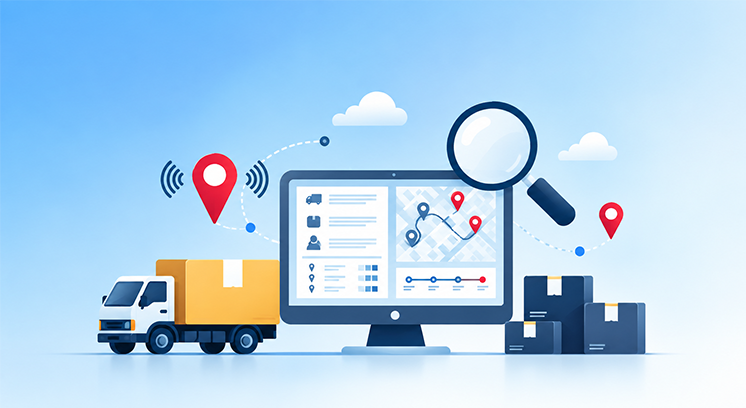
The Logistics Industry Is Finally Using AI More Practically
Everyone in logistics suddenly became "AI-powered" almost overnight. But most freight forwarders quickly realized that adding AI to a dashboard does not automatically improve freight operations.
Operations teams still deal with delayed shipments, manual paperwork, endless follow-ups, and customer escalations every single day. That is why freight companies are becoming much more practical about AI in 2026.
They are no longer chasing flashy AI promises. They want improvements that they can measure.
According to Gartner, 83% of supply chain organizations are applying AI gradually to solve specific operational problems rather than attempting full-scale transformation immediately.
This blog breaks down where logistics AI technology is genuinely helping freight forwarders today, where AI supply chain automation is delivering real ROI, and which AI trends are still mostly hype.
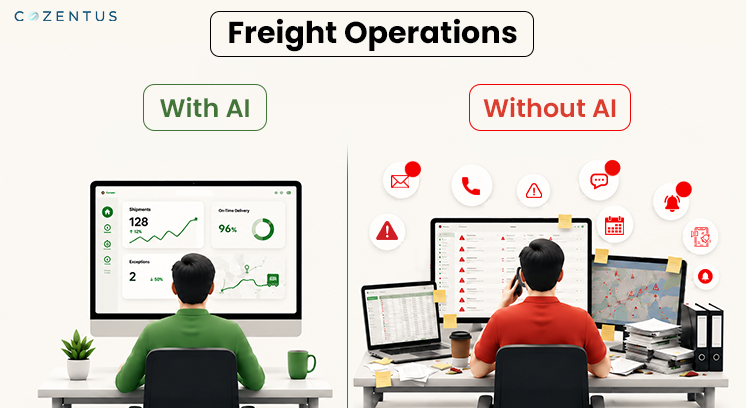
Why Freight Companies are Investing in AI
Despite how complex modern logistics has become, many freight teams still rely heavily on emails, spreadsheets, PDFs, and disconnected software systems to manage daily operations.
This creates constant pressure.
Most freight companies are now investing in AI to:
- Reduce repetitive manual work
- Improve real-time shipment visibility
- Respond faster to delays and disruptions
- Automate document processing and data extraction
- Improve customer communication and response speed
- Manage growing shipment volumes without rapidly increasing headcount
Even small delays in visibility or communication can impact inventory planning, warehouse scheduling, customer SLAs, and overall operational costs.
This is exactly why AI supply chain automation is gaining so much traction across logistics.
And honestly, the companies seeing the strongest results are not trying to automate their entire operation overnight. Most are starting with very specific operational problems first, usually around visibility, document processing, and exception management.
Predictive Shipment Visibility: The Biggest AI Win
Traditional visibility systems were heavily dependent on carrier milestone updates. If a carrier updated the shipment late, the visibility update came late too. That created major blind spots across freight operations, especially during delays, transhipment movements, or congestion-heavy routes.
Modern AI logistics software works very differently now.
AI-powered visibility platforms combine multiple operational data sources together, including:
- Carrier APIs
- GPS and IoT tracking
- AIS vessel tracking
- Historical transit patterns
- Weather intelligence
- Port congestion updates
- Customs events and clearance data
Machine learning models continuously analyze these datasets to identify shipment risks much earlier than traditional tracking systems.
For example, AI systems can now detect:
- Containers likely to miss transhipment connections
- Carrier schedules becoming unreliable
- Routes facing congestion risks
- Shipments where the ETA is becoming less accurate
- Potential customs clearance delays
Teams can intervene before any disruption fully impacts the shipment. Now, they can reroute cargo faster, escalate carrier issues earlier, and update customers proactively rather than reacting after delays already happen.
Looking for custom AI solutions ?
AI Document Processing: The Time Saver
Almost every shipment generates multiple operational and compliance documents throughout the shipment lifecycle.
These documents usually include:
- Bills of lading
- Commercial invoices
- Packing lists
- Arrival notices
- Delivery orders
- Customs declarations
For many freight companies, document handling is still highly manual. Ops teams spend a significant amount of time downloading files, extracting shipment details, updating systems, validating information, and cross-checking data across multiple documents.
This is where Cozentus' machine learning freight systems and AI-powered intelligent document processing (IDP) platforms are creating real improvements. These systems use OCR, NLP, and ML models to automatically extract shipment information from PDFs, scanned documents, emails, carrier files, and more.
These AI-powered IDP systems can now:
- Match shipment references automatically
- Detect missing or incorrect fields
- Validate document consistency
- Compare data across multiple logistics documents
- Push structured shipment data directly into TMS workflows
This automation allows the ops teams to focus more on shipment coordination, customer communication, and exceptions that require human decision-making.
AI-Based Exception Management: The Disruption Manager
Freight forwarding runs on constant disruption management. Containers get rolled, flights get delayed, customs hold happens unexpectedly, and weather disruptions impact schedules regularly.
The real challenge for operations teams is figuring out which shipment issues need urgent attention first. This is where modern supply chain AI tools are becoming extremely valuable.
AI-powered exception management systems can now prioritize shipment risks based on:
- Customer priority
- SLA impact
- Shipment value
- Delay severity
- Revenue exposure
- Historical route performance
Instead of manually monitoring every shipment equally, AI systems show the highest-risk shipments first. That helps operations teams respond faster, reduce escalations, and improve decision-making during disruptions.
Many AI freight management platforms can also generate predictive alerts before delays fully escalate.
Gen-AI Customer Service: The AI Support Upgrade
Customer communication is still one of the most time-consuming parts of freight operations, especially during shipment delays, disruptions, or customs-related issues.
Modern AI freight management platforms with Gen-AI chatbots can now pull live data from TMS platforms, visibility systems, carrier APIs, and shipment events to generate customer-ready responses automatically in real time.
Gen-AI systems are helping freight companies:
- Answer "Where is my shipment?" queries automatically
- Send delay updates before customers start following up
- Reduce constant email back-and-forth across teams
- Give customers faster replies during shipment disruptions
- Pull live shipment updates directly from logistics systems
Some platforms are also starting to generate AI-based resolution suggestions automatically during disruptions. That is slowly turning customer support from endless shipment follow-ups into faster, data-driven communication.
What's Still Hyped is Fully Autonomous Freight Forwarding
AI is improving freight operations quickly, but fully autonomous freight forwarding is still far from reality.
Global logistics remains too unpredictable for AI systems to manage independently end-to-end. Freight teams still deal with challenges like:
- Documentation discrepancies
- Country-specific compliance rules
- Carrier negotiations and schedule changes
- Geopolitical and trade disruptions
Modern AI freight management systems are becoming very effective at predicting delays, identifying shipment risks, and recommending next-best actions. But unpredictable logistics situations still require human judgment, operational experience, and decision-making.
The future is likely moving toward human-supervised AI operations rather than completely autonomous freight execution.
Conclusion: AI in Logistics Is Finally Feeling Real
A lot of freight companies rushed into AI conversations over the last few years because the market pressure was impossible to ignore. But now the industry is becoming more realistic about what actually creates operational value.
The companies seeing real results are usually not the ones chasing the most advanced AI demos. They are the ones improving small operational gaps that slow teams down every day. Because in logistics, technology only works when operations teams actually trust it enough to use it daily.
That is also why Cozentus is focusing more on practical AI workflows built around real freight execution rather than adding AI features just for visibility in the market.