The Technology Nobody Celebrates But Everyone Depends
Supply chain companies in 2026 are heavily investing in AI-driven systems, such as predictive visibility, autonomous planning, smart control towers, AI-powered freight workflows, and automated decision-making.
But somewhere between the AI demos and digital transformation plans, companies run into a problem they did not expect: The technology is ready. Their data is not.
That usually becomes obvious during implementation. Reports do not match. Carrier updates arrive late. Teams start debating whose numbers are correct before they can even discuss decisions.
This is why supply chain data integration has become a serious topic in 2026. And at the center of that conversation sits something surprisingly unglamorous - "ETL".
Nobody gets excited about data pipelines until they start breaking operations.
In this blog, we explore how supply chain ETL and logistics data integration help connect siloed systems, improve AI accuracy, and build smarter, more reliable supply chain operations.
What Is ETL in Logistics and Supply Chain
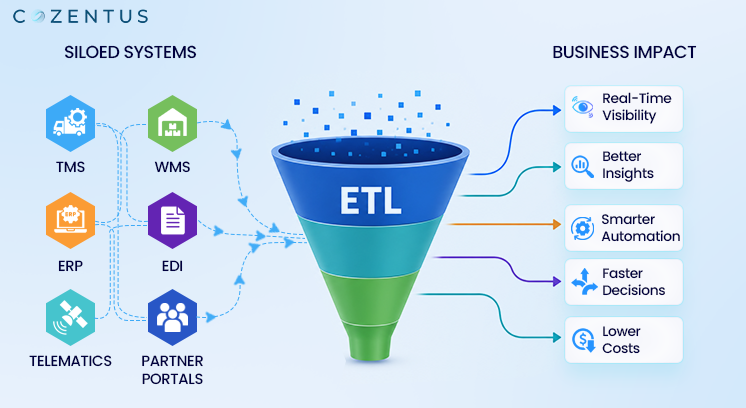
ETL stands for Extract, Transform, and Load. While the acronym sounds technical, the process is highly relevant to everyday logistics operations.
Extract means collecting information from operational systems. Transform means cleaning, validating, and standardizing that information so formats and definitions become consistent. Load means moving prepared data into a centralized destination where teams can use it for reporting, analytics, visibility, and automation.
A modern logistics ETL pipeline usually works across several environments, such as:
- TMS platforms
- WMS systems
- ERP software
- EDI feeds
- Carrier portals
- Telematics systems
- Freight invoicing platforms
- Customer visibility tools
- API-based integrations
Most companies have added multiple systems gradually over time to solve operational challenges. For example, a transportation platform may record carrier information differently from an ERP. Shipment milestones may follow different logic between internal systems and carrier updates.
This is exactly why ETL logistics matters. ETL is not simply a technical process for moving data between systems. It is the mechanism that makes disconnected systems usable together.
Common ETL Challenges in Logistics and Freight Operations
Building a supply chain ETL environment sounds straightforward, but logistics data integration is not so simple. Freight companies work across multiple systems, trading partners, and data standards, which creates several technical and operational challenges.
Some of the most common ETL logistics challenges include:
1. Legacy System Integration
Many TMS, ERP, and warehouse systems were implemented years ago and were never designed for real-time connectivity. Extracting the information from these platforms requires additional transformation logic and integration layers.
2. Poor Master Data Management
Carrier names, shipment references, customer records, and location codes may follow different formats in different systems. Without proper standardization, duplicate records and reporting conflicts become common.
3. Different EDI Formats from Different Partners
Different carriers and trading partners may structure EDI transactions differently, which affects consistency and increases validation effort across systems.
4. API Inconsistency
Modern APIs improve connectivity, but payload formats, authentication rules, and version updates may vary between the providers. This makes integrations harder to maintain over time.
5. Scalability Challenges
As the number of shipments grows and partner ecosystems expand, a logistics ETL pipeline must process the additional volumes of operational data without slowing visibility, reporting, or automation workflows.
These technical realities are one of the key reasons why supply chain ETL projects require long-term planning and strong supply chain data engineering practices.
Looking for Custom AI Solutions?
How a Logistics ETL Pipeline Supports AI and Automation
Logistics companies are adopting AI like there's no tomorrow, but many of them are realizing that sophisticated tools still depend on strong data foundations.
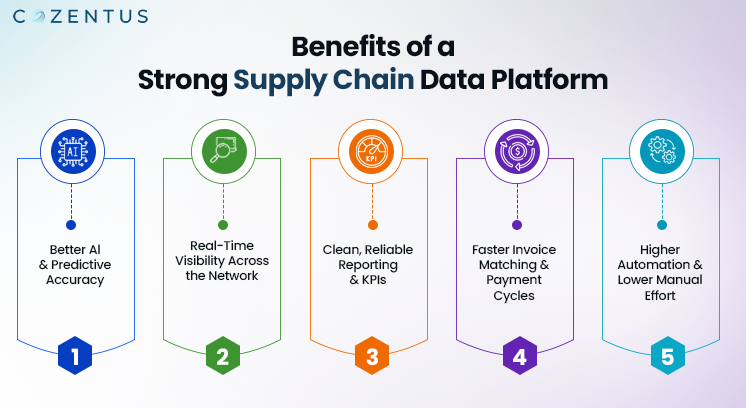
Predictive models and AI engines learn from historical and operational data, while visibility and automation systems depend on that same data to function reliably. If that data is fragmented or inconsistent, you do not get the expected performance.
Let's take an example of a shipment delay prediction model.
The system may analyze milestone history, carrier performance, route patterns, and operational events to forecast disruptions. If shipment updates are incomplete or carrier data is inconsistent across systems, the prediction engine becomes less accurate because it is working with unreliable data.
This is why ETL freight and AI discussions are now happening together.
A strong logistics ETL pipeline improves:
- Predictive analytics
- Automated exception handling
- Shipment visibility alerts
- Freight forecasting
- Invoice automation
- Operational reporting
AI is powerful, but it does not automatically make poor information correct. In many cases, AI simply exposes weaknesses that already existed inside disconnected systems.
How to Build a Supply Chain Data Architecture and Logistics Data Warehouse
Over the past decade or so, logistics companies invested heavily in digital tools, especially in AI in recent years. Most of those investments solved real business problems, but integration was often treated as a secondary concern.
Companies may own high-quality software yet still struggle to build a single operational picture because information remains scattered across systems.
This is where data pipeline supply chain strategies become more important.
A strong supply chain data architecture focuses on creating better consistency across multiple systems and ensures that the data moves through validated rules. That usually includes:
- Data extraction frameworks
- Transformation logic
- Master data management
- Centralized storage
- Governed reporting standards
- Controlled user access
These capabilities often support a logistics data warehouse or broader supply chain data platform.
A warehouse environment creates a trusted layer for analytics and reporting by bringing information from multiple systems into one single standardized structure. As a result, it improves visibility and creates stronger support for automation and forecasting.
The objective is not building technical complexity for its own sake. The objective is to create a reliable operational truth.
Conclusion: ETL Will Define Supply Chain Success in 2026
ETL doesn't usually receive the same attention as AI or automation, yet it often determines whether those investments succeed or not.
The logistics industry is moving toward more connected and intelligent operations, but intelligence depends on reliable information. When systems remain disconnected, visibility weakens, automation becomes harder to trust, and teams continue relying on manual workarounds.
As logistics networks become more connected and AI adoption continues to grow, the importance of supply chain ETL and modern supply chain data platforms will only increase. Companies that treat ETL as a strategic capability rather than backend maintenance will be better positioned to scale automation, improve visibility, and adapt faster to disruption.
ETL may be unglamorous, but in 2026 and beyond, it is becoming one of the most important investments behind resilient and intelligent supply chains.