


Modern Supply Chain Needs Better Technology
Look around your organization. You are dealing with more data than ever before, but somehow still lacking the visibility you need. Your teams use advanced tools, but they still depend on spreadsheets. You have invested heavily in large platforms, yet their teams still rely on emails, spreadsheets, and manual interventions.
This is happening everywhere. Customer expectations keep rising. Risks change quickly. Decisions must be made in real time. Old, one-size-fits-all systems simply cannot keep up with this pace.
This is why more companies (especially the supply chains) are now moving toward composable architecture.
These are modern architecture that allows you to build your supply chain system the way you want it, layer by layer, capability by capability. It gives you flexibility without forcing a complete system replacement.
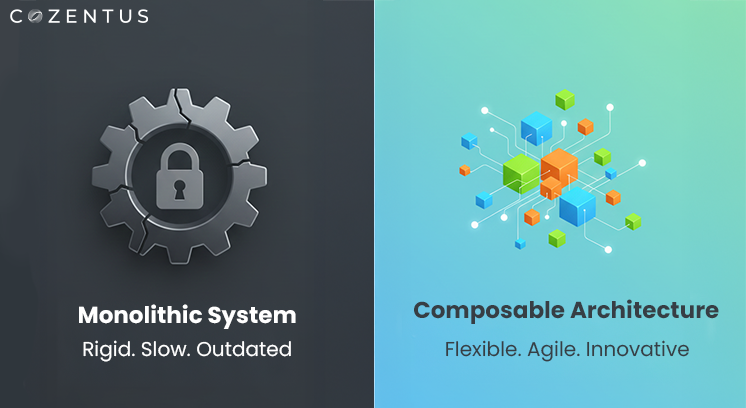
Why Traditional Platforms No Longer Perform
Modern supply chains move faster and deal with more complexity than ever before, but traditional systems were never built for this level of change. As a result, leaders find themselves depending on platforms that cannot support today’s pace of business.
-
Traditional Systems Cannot Change Quickly
Every enhancement is expensive and slow, and even small improvements require long IT cycles, vendor dependencies, and heavy testing. This makes it difficult for businesses to respond quickly when their processes or customer needs change.
-
Disruptions Expose System Limitations
Weather delays, supplier failures, cost volatility, or labor constraints all require fast adjustments, but rigid platforms do not adapt well to sudden change. As a result, teams often struggle to manage disruptions in real time and end up reacting late.
-
Integration Remains a Major Struggle
Different business units, carriers, suppliers, and partners all use different systems, and monolithic platforms were not designed for cross-ecosystem data exchange. This leads to slow data flow, inconsistent information, and constant integration workarounds.
-
Operations Depend Too Much on Manual Work
When systems cannot keep up, people take over and build parallel processes outside the system, which increases errors and costs. This not only slows down operations but also adds unnecessary pressure on teams.
-
Data Gets Stuck in Silos
High-quality decision-making becomes difficult when data is scattered, inconsistent, or delayed. Leaders lose visibility at the moments they need clarity the most.
Composable Technology Benefits in Supply Chains
Leading SaaS companies say that composable architecture allows organizations to modernize their tech without the risk of rebuilding everything.
Here is why it works.
-
Flexibility to Adapt at Any Time
Composable systems make it easy to add new features, remove outdated ones, or enhance existing capabilities whenever your business needs change. You are not locked into a rigid platform or long release cycles. This flexibility allows your systems to grow with you instead of slowing you down.
-
Faster Implementation Cycles
Because composable modules are lighter and easier to deploy, you can introduce new capabilities much faster than with traditional system upgrades. There is no need for long development cycles or complex rework. This means you start seeing real value in weeks or months instead of years.
-
Better Partner and Ecosystem Connectivity
Composable architectures use APIs and microservices to connect seamlessly with suppliers, carriers, logistics partners, and customers. This improves data flow, reduces communication gaps, and strengthens collaboration across your entire network. As a result, you get better visibility and faster responses from everyone involved.
-
Lower Long-Term Cost
With composable tech, you invest only in the capabilities you need instead of paying for a large platform with unused features. You also avoid expensive upgrades and system replacements. Over time, this reduces both operational and technology costs while giving you more control over where your budget goes.
-
Continuous Innovation
Composable systems allow you to add new features and improvements whenever you need them, without waiting for major releases. This keeps your operations current, competitive, and aligned with market changes. By continuously upgrading your capabilities, your business stays ahead instead of falling behind.
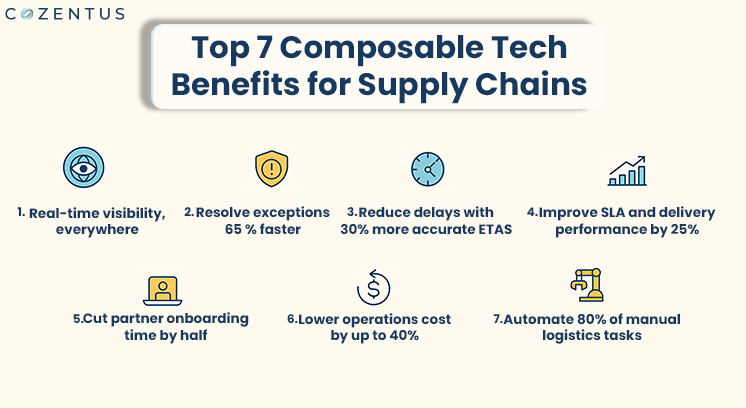
How Composable Tech Helps Companies Grow
Enterprises across industries are using composable tech in many different ways. Below are some of the most practical and impactful applications.
-
Real-Time Visibility Built on Top of Existing Systems
Companies no longer try to replace their ERPs, TMS, or WMS. They add visibility modules that unify order, shipment, and inventory data. For example, Cozentus helps logistics companies create a single view of real-time shipment tracking, without disturbing core systems. This improves decision-making and reduces manual follow-ups.
-
Decision Making Powered by Modular Analytics and Forecasting
Businesses are adding small, focused analytics engines that deliver predictive ETAs, demand forecasts, cost predictions, and performance insights. These analytics layers sit outside legacy platforms, so they deliver value instantly without complex integration work.
-
Modern Control Towers Created in Phases
Instead of building one large control tower at once, companies start simple. They begin with monitoring, then add:
- SLA tracking
- predictive alerts
- asset performance insights
- exception automation
- partner scorecards
This phased approach reduces risk and speeds up adoption.
-
Scalable Automation for Operational Processes
Many supply chain processes still involve heavy manual effort. Enterprises use composable automation modules to digitize tasks like:
- Freight audit
- Invoice validations
- Document extraction
- Claims management
- Ticket handling
Cozentus introduces AI, workflow automation, and data validation into these processes. This helps teams scale without adding additional resources.
-
Early Detection of Supply Chain Risks
Risk engines built using modular components can easily detect:
- Route disruptions
- Weather risks
- Port delays
- Supplier unreliability
- Cost anomalies
- Demand shifts
Risk monitoring can be added without touching core systems, which makes it easy to adopt.
-
Test Automation that Accelerates Technology Growth
Modern supply chains rely on frequent technology upgrades. Composable testing frameworks ensure every new deployment is stable and safe. Cozentus delivers modular test accelerators that reduce testing time and increase coverage, helping enterprises release enhancements faster.
-
Seamless Integration of Partner Ecosystems
Composable integration layers allow businesses to connect easily with:
- Carriers
- 3PLs
- Freight forwarders
- Suppliers
- Customers
This reduces onboarding time and improves the quality of shared data.
-
Digital Workflows for Better Internal Collaboration
Companies are building digital workflows for:
- Order exceptions
- Approval cycles
- Customer communications
- Internal escalations
These modular workflows replace email chains and bring more structure to operations.
Why Leaders Prefer Composable Systems More
Leaders across industries are choosing composable systems because they solve real problems that traditional platforms cannot. They want technology that moves with their business, not technology that holds them back.
- It Gives Them Control: Composable tech lets leaders choose the tools they want without being tied to one vendor. This freedom helps them adjust their systems anytime without waiting for long platform updates.
- It Creates Immediate Business Value: Small, targeted modules deliver quick improvements that teams can use right away. Leaders see measurable results faster, making it easier to justify investments and continue modernizing step by step.
- It Reduces Complexity: Composable architecture simplifies systems by breaking large platforms into manageable pieces. Companies can clean up their tech landscape gradually, making operations easier to maintain and improve over time.
- It Prepares Them for the Future: When new disruptions or demands appear, composable systems adapt quickly. Leaders can add or change capabilities without rebuilding everything, keeping their operations ready for whatever comes next.
- It Lowers Risk: Because changes happen in small, controlled modules, businesses can modernize without disrupting ongoing work. This reduces operational risk and gives teams confidence to adopt new capabilities safely.
How This Change Will Affect Your Business
When you move to a composable approach, you are doing more than updating your technology. You are choosing a way of working that actually supports your business instead of slowing it down. It means you stop forcing your teams to adjust to rigid systems and start building systems that adjust to you.
With this shift, your technology becomes easier to grow, easier to manage, and easier to improve. You get clearer visibility into what is happening across your operations. You make decisions with better information. Your teams spend less time fixing issues and more time doing meaningful work. And as your business expands, your systems expand smoothly with it instead of becoming a burden.
One of the biggest benefits is freedom. You are no longer tied to one big platform or one vendor. You can bring in the right tools for the right problems and use only what adds real value.
At Cozentus, we guide companies through this transition in a calm, low-risk way. There is no need to rip out what you already have. You simply add what you need, one piece at a time, so your system becomes stronger without disrupting your daily operations.
Conclusion: How You Should Move Forward
Supply chains are changing faster than ever, and old systems simply cannot keep up. To stay competitive, companies need technology that can adjust, scale, and evolve without slowing the business down.
That is exactly what composable architecture delivers.
It helps you improve visibility, streamline work, and stay ready for whatever comes next. The companies that move in this direction now will be the ones leading their industries tomorrow.
If you want to explore how composable tech can fit into your systems without any disruption, let’s talk about it.