

Supply Chain Has Become A Retail Battleground
Earlier, retailers competed on store locations, pricing, and promotions. Then came e-commerce, which offered faster delivery and endless choice. Today, customers expect products to be available instantly, delivered on time, and returned without effort. When something goes wrong, customers do not blame the weather, carriers, or warehouses. They blame the brand.
The best retailers have understood this shift. They know that customer experience is deeply connected to how well their supply chain works. That is why supply chain technology has moved from the background to the center of retail strategy.
This blog explains how leading retailers are using supply chain technology to beat their competitors and what senior leaders can learn from them.
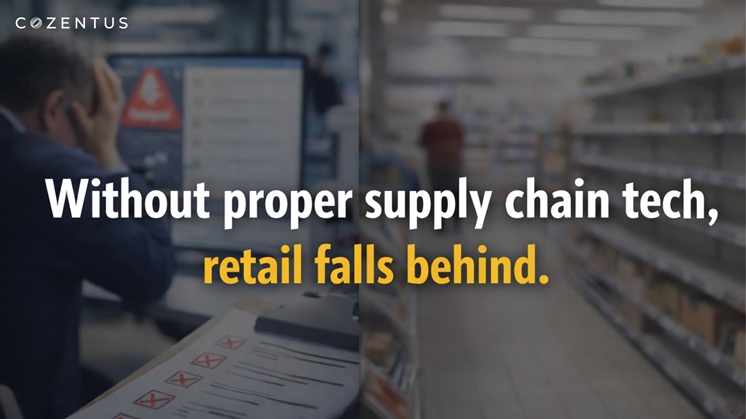
Supply Chain Visibility Is the Most Important Advantage
Retail leaders cannot make good decisions if they do not know what is happening right now. Many retailers still depend on delayed reports, emails, and spreadsheets. By the time issues appear, customers are already impacted.
Top retailers invest in real-time visibility across inventory, orders, and shipments. They know where products are, what is delayed, and which orders are at risk. This visibility is not just inside their own systems. It also includes suppliers, warehouses, carriers, and fulfillment partners.
When data flows continuously, teams stop reacting late and start acting early. For executives, this kind of visibility creates confidence. It replaces assumptions with facts and reduces bad surprises.
Turn Raw Data into Clear Decisions
Visibility creates data. But data alone does not create value. The best retailers focus heavily on turning data into clear and simple decisions. This is where analytics and intelligence come in.
Instead of showing long reports, modern supply chain platforms highlight what matters most. They answer questions like:
- Which shipments are most likely to miss delivery promises
- Which products are at risk of stockouts
- Which delays will impact key customers
- Where costs are rising unexpectedly
This approach helps leaders focus on priorities instead of noise. It also aligns teams across planning, logistics, and operations around the same facts. Retailers that do this well move faster and make less costly mistakes.
Predictive Insights Are Replacing Reactive Firefighting
Leading retailers do not wait for disruptions to occur. They use historical data, current conditions, and predictive models to anticipate problems before they happen. For example, they can:
- Identify lanes that are likely to face delays
- Locations that may run out of inventory
- Demand spikes that could strain capacity
This allows teams to take early action. They can adjust inventory placement, change shipping routes, or update delivery commitments before customers are impacted.
From a leadership perspective, this reduces firefighting. Instead of managing crises, leaders manage risks.
Integrated Systems Reduce Complexity and Confusion
Many retailers operate with disconnected systems. One system for planning, another for warehouse operations, another for transportation, and yet another for finance. This creates data mismatches and confusion.
The best retailers in the world invest in platforms that bring data together. When systems are connected, information flows automatically. Teams no longer spend time reconciling numbers or questioning reports.
Integration also improves speed. Decisions that once took days can now be made in hours or minutes. For executives, this creates a single source of truth. Everyone sees the same data and works toward the same goals.
Logistics Technology Is Now a Customer Experience Tool
Logistics used to be viewed mainly as a cost center. But today, it is directly related to customer satisfaction.
Leading retailers use logistics technology to monitor shipments in real time, track carrier performance, and manage delivery promises accurately. When a delay happens, these systems alert teams immediately.
This allows proactive communication with customers or quick corrective action. Retailers that excel here protect their brand reputation. Customers may accept delays, but they expect honesty and timely updates.
From a business standpoint, logistics technology also helps manage rising transportation costs and improve efficiency.
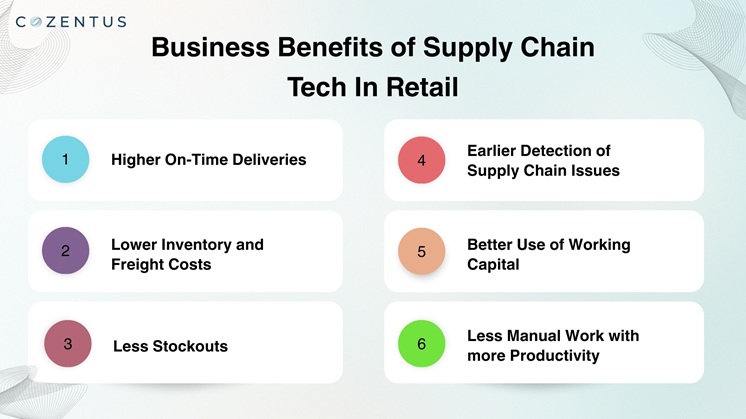
Inventory Optimization Balances Growth and Cost
Inventory decisions are some of the most difficult choices retail leaders face. Too much inventory ties up cash and increases risk. Too little inventory leads to lost sales and unhappy customers.
Top retailers use supply chain technology to find the right balance. They combine demand signals, sales trends, and inventory data to make smarter planning decisions.
They also check their inventory across the entire network instead of in silos. Store inventory, warehouse stock, and fulfillment inventory are planned together.
This approach supports omnichannel strategies and improves availability without increasing overall inventory levels.
Automation Frees Teams to Focus on What Matters
Many high-performing retailers emphasize automation as a key factor for their success. Manual processes slow teams down and introduce errors.
Tracking shipments manually, reconciling freight invoices, and managing exceptions through emails wastes valuable time. Leading retailers automate these tasks using technology.
Systems handle routine work while people focus on solving problems and improving performance. Automation also improves accuracy and consistency.
This leads to faster cycles, fewer disputes, and better cost control. For executives, automation delivers scale without increasing headcount.
Control Towers Bring Everything Together
Control towers are becoming a common theme across industry thought leadership. A supply chain control tower brings visibility, analytics, and workflows into one unified view. It acts as a nerve center for operations.
Leaders can see:
- What is happening now
- What is likely to happen next
- Where attention is needed most
This is especially valuable for large retailers with complex networks. Instead of fragmented updates from different teams, leaders get a clear and structured picture.
Control towers support faster decisions and better collaboration across functions.
Resilience Is Not Optional Anymore
Recent years have shown that disruptions are not rare events. They are part of normal operations.
Top retailers focus heavily on resilience. They use technology to monitor risks, simulate scenarios, and prepare response plans.
When disruptions occur, resilient retailers recover faster. They protect service levels and maintain customer trust.
It gives leadership teams confidence during uncertainty, because they know the business can absorb shocks. Over time, this resilience turns into a competitive advantage that is hard for others to copy.
What Retail Leaders Can Learn from the Best
The most successful retailers follow a few clear principles that guide how they use supply chain technology. These lessons are practical, proven, and focused on solving real business problems.
- Visibility comes first
- Decisions must be driven by data
- Integration reduces complexity
- Automation improves speed and accuracy
- Logistics impacts customer experience
- Resilience protects revenue and brand
- Leadership alignment is critical
Retailers that apply these principles operate with more confidence and control. Over time, this approach helps them deliver better service and stay ahead of competitors.
Final Thoughts: Supply Chain Technology as a Growth Strategy
Supply chain technology is no longer just about efficiency. It is about growth, trust, and long-term competitiveness.
The best retailers understand this deeply. They invest with purpose, align technology with business outcomes, and use data to lead confidently.
For retail leaders today, the opportunity is clear. Those who act now will shape customer expectations tomorrow. Retailers that delay risk falling behind as customer expectations continue to rise.
The time to modernize operations and strengthen supply chain foundations is now, not later.
Don’t miss out on innovation. Get your custom retail supply chain tech now. Book a meeting.