

Supply Chains Now Decide Retail Success
You can have the best brand, the best products, and the best marketing. But if inventory is late, shipments are wrong, costs keep changing, and customers do not get what they were promised, you still lose. This is what many retail leaders across the US and global markets are realizing.
The real battle in retail is no longer about who sells better. It is about who runs their supply chain better. This is why supply chain technology has become the strongest competitive weapon for modern retailers.
Retailers that see clearly, act quickly, and control their operations in real time are getting ahead. The rest are stuck reacting to problems after they have already hurt their revenue, margins, and customer trust.
As per a survey by Forbes, leaders saw up to 77% ROI within 12 months of adopting AI technologies in their supply chain operations.
Let’s talk about why this shift is happening and how the right technology changes everything.
Why Retail Supply Chains Have Become More Difficult to Manage
Retail supply chains today include global sourcing, regional distribution centers, store replenishment, ecommerce fulfillment, and last-mile delivery. Each step creates data that must be tracked, validated, and shared across teams.
Many retailers still depend on legacy systems that were built for a simpler environment. These systems struggle to support modern retail logistics technology and inventory visibility software because they do not provide real-time updates, they do not integrate easily with partners, and they do not support advanced analytics.
This leads to operational challenges such as:
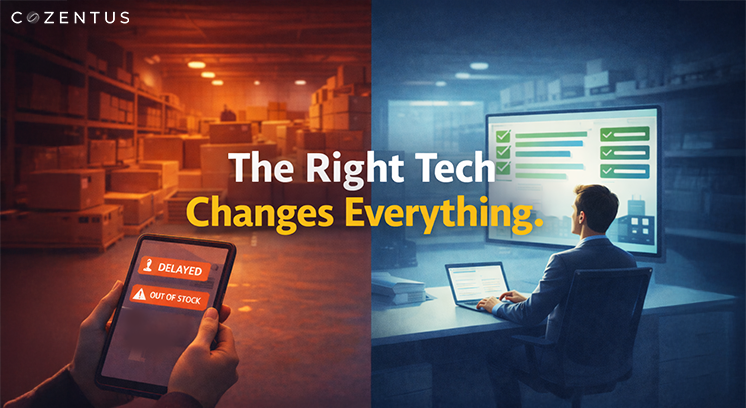
- Shipment delays discovered too late: Teams often find out that a shipment is late only after it has already missed its delivery window. By the time the issue is visible, there is little time left to fix it or inform the customer properly.
- Inventory records that do not match actual stock: The system may show products available even when shelves or warehouses are already empty. This leads to orders being accepted that cannot be fulfilled on time.
- Transportation and freight cost errors: Freight invoices often include wrong rates, duplicate charges, or extra fees that sometimes go unnoticed. These small mistakes add up and increase logistics costs over time.
- Customer complaints due to missed delivery promises: When delivery dates are missed, customers lose trust in the brand. This results in more support calls, refunds, and loss of repeat business.
- Heavy manual effort to reconcile supply chain data: Teams spend hours matching data across spreadsheets, emails, and systems to understand what actually happened. This slows down decision-making and increases the risk of errors.
Without modern supply chain management software for retailers, these issues grow quickly as operations scale.
Why US Retailers Are Investing in Digital Supply Chain Platforms
Retailers across the US are increasing investments in digital supply chain platforms because the business benefits are clear.
Companies that use retail fulfillment technology, transportation management for retail, and control tower software recover faster from disruption, reduce inventory waste, and deliver better customer experiences.
Cozentus supports these retailers through real-time visibility platforms, AI-powered analytics, freight audit automation, risk monitoring, and supply chain control tower software designed specifically for modern retail operations.
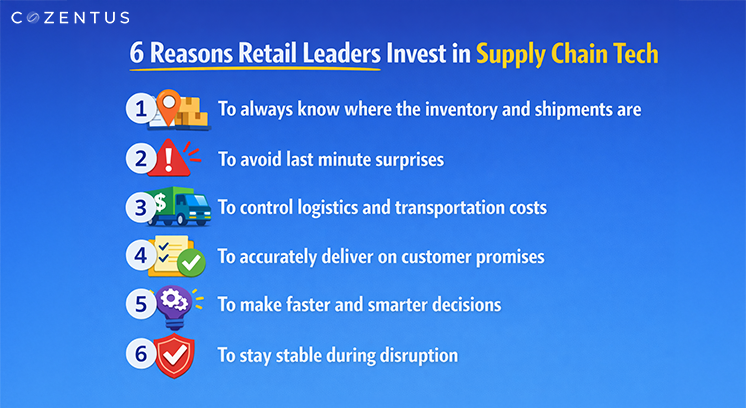
How Real-Time Visibility Improves Retail Operations
Real-time visibility is the foundation of every modern retail supply chain platform. It allows teams to see the current status of shipments, inventory, and orders across the entire network.
With real-time supply chain visibility software and a supply chain control tower, retailers gain:
- A live view of inbound and outbound shipments
- Early warnings when deliveries are at risk
- Accurate inventory positions across warehouses and stores
- A single source of truth for operations and customer service
This type of inventory visibility software allows retail teams to act before problems affect customers. When shipment risks are visible, orders can be rerouted, stock can be reallocated, and service levels can be protected.
Large US retailers with complex logistics networks depend heavily on retail logistics platforms to manage operations of this scale.
How AI and Analytics Improve Supply Chain Decisions
Data is only valuable when it leads to better decisions. That is why AI in retail supply chains and Gen AI dashboards are becoming core features of modern retail supply chain software. These tools analyze shipment, inventory, cost, and supplier data to deliver actionable insights that teams can trust and act on quickly across departments.
Retail leaders can see:
- Which orders are most likely to be delayed
- Where transportation costs are rising
- Which suppliers are missing service targets
- Which products are at risk of stockouts
By using AI-powered supply chain analytics, retailers can forecast demand, optimize fulfillment, and adjust transportation plans in real time. This helps them avoid last-minute firefighting and maintain smooth operations even during high demand periods.
Why Freight Audit and Invoice Automation Protect Retail Profitability
Transportation is one of the highest cost areas in retail logistics. Errors in billing and manual invoice processing directly reduce margins and often remain unnoticed until weeks after payments are made.
With freight audit automation and intelligent invoice processing software, retailers can validate every charge against contract rates and shipment data. This ensures that they only pay for services that were actually delivered. It also creates greater transparency between retailers and their transportation partners while reducing the risk of hidden fees and duplicate charges.
This provides:
- Lower transportation costs
- Faster invoice processing
- Improved cash flow
- Higher financial accuracy
These systems are now standard features in modern retail supply chain management platforms because they give finance and operations teams real control over logistics spend. They also reduce disputes, improve audit readiness, and allow leadership to forecast transportation budgets with greater confidence.
Over time, this financial clarity helps with better planning, stronger vendor relationships, and more predictable profitability across the entire retail logistics network.
How Risk Monitoring Strengthens Retail Supply Chains
Disruptions in weather, ports, labor, and transportation can quickly impact retail operations across stores, warehouses, and ecommerce fulfillment networks.
AI-driven risk monitoring software allows retailers to identify issues before they affect customers, revenue, and brand reputation. By tracking shipment movement, carrier performance, and external events in real time, these systems give operations teams early warnings and clear priorities.
With predictive supply chain risk management, retailers can:
- Detect shipment delays early
- Identify high-risk routes and suppliers
- Reroute freight before service levels drop
- Maintain stability during disruptions
This makes retail logistics technology far more resilient and reliable. It also helps retailers protect customer experience, control costs, and maintain steady operations even when supply chain conditions change unexpectedly.
Conclusion: Now is the Right Time for Retailers
Retail is changing fast, and the supply chain is now at the heart of every success story. Retailers that invest in retail supply chain technology, inventory visibility software, AI-powered analytics, and logistics automation are running smoother operations, serving customers better, and protecting their margins. These businesses are able to grow with confidence, while others struggle to keep up.
As customer expectations continue to rise and disruptions become more common, having a modern and connected supply chain will make you stand out from your competition. It is what allows leaders to stay in control, make better decisions, and keep their brand strong.
Want custom supply chain tech? Talk to our expert.