Supply Chain Planning Cycle in 2026: What’s Changing?
Supply chain planning cycles in 2026 are shifting from fixed, time-based processes to more continuous and data-driven models. Traditional planning relied on historical data, batch processing, and periodic forecasting, which worked when demand patterns were stable and easier to predict.
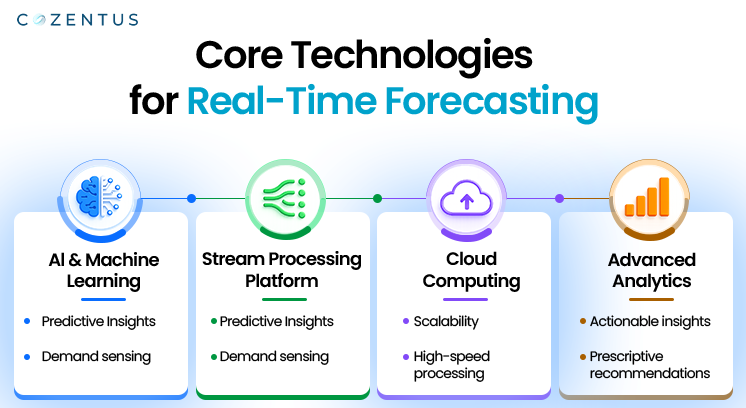
Today, planning is influenced by real-time data streams, such as transportation systems, warehouse operations, digital sales channels, and connected supplier networks. This helps organizations to move beyond static forecasts and adopt real-time forecasting in supply chains, supported by AI-driven demand sensing, machine learning models, and predictive analytics.
Instead of updating plans once a day or week, forecasts are now refreshed continuously using live demand signals and event-driven data. This improves forecast accuracy, demand visibility, and response time across the supply chain.
As a result, planning becomes more adaptive, scalable, and resilient, allowing businesses to align supply with demand more effectively while reducing delays, inefficiencies, and operational risks.
Why Traditional Supply Chain Planning Cycles No Longer Work
The traditional planning cycle was designed for predictability. It assumes that demand will behave like they did before and that changes can be managed within fixed intervals. That assumption is not true anymore.
Several factors have made traditional planning ineffective, such as:
1. Rapidly changing demand patterns
Customer demand is influenced by multiple real-time factors:
- Online trends and social media influence
- Flash sales and promotions
- Seasonal spikes and sudden drops
- Competitive pricing changes
A forecast created even 24 hours earlier may already be outdated.
2. Continuous flow of real-time data
Modern supply chains generate data constantly from:
- IoT sensors and tracking devices
- Warehouse management systems
- E-commerce platforms
- Supplier and logistics networks
Traditional planning cycles fail to use this continuous data effectively because they operate in batches instead of in real time.
3. More disruptions
Supply chain disruptions are not occasional anymore. They are ongoing and unpredictable:
- Port congestion and delays
- Supplier inconsistencies
- Transportation bottlenecks
- Fuel price fluctuations
4. Higher customer expectations
Any delay in response due to outdated planning directly impacts customer satisfaction.
Customers now expect:
- Faster deliveries
- Accurate ETAs
- Real-time updates
What Is Real-Time Forecasting in Supply Chain Management
Real-time forecasting in supply chain management refers to continuously updating demand predictions based on live data. Forecasts evolve as new information becomes available, keeping planning aligned with current demand patterns and operational conditions.
This approach relies on:
- Artificial intelligence and machine learning
- Real-time demand signals
- Predictive analytics
- Integrated data from multiple sources
These technologies work together to process large volumes of structured and unstructured data, which delivers faster and more accurate demand sensing.
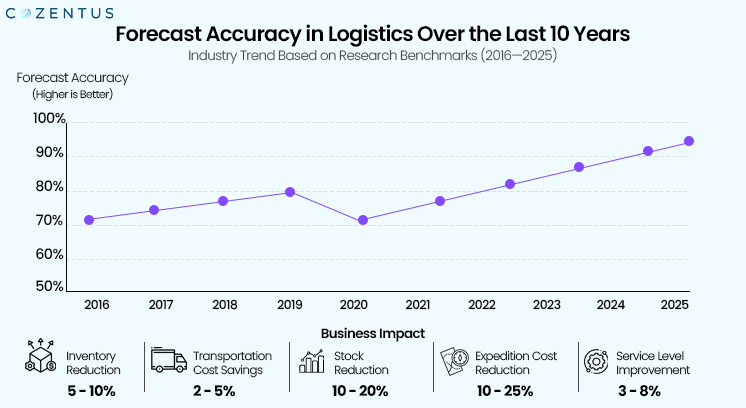
The key advantage here is responsiveness. Businesses can adjust decisions immediately rather than waiting for the next planning cycle, leading to improved forecast accuracy, lower inventory risk, better service levels, and stronger overall supply chain agility and operational efficiency.
How AI-Driven Demand Sensing Improves Forecast Accuracy
AI-driven demand sensing is a critical component of real-time forecasting. It focuses on understanding current demand signals instead of relying only on historical data.
It works by analyzing multiple data sources, such as:
- Current order volumes
- Website and app activity
- Point-of-sale data
- External factors like weather or market trends
Machine learning models process this data to identify patterns and predict short-term demand changes.
Key benefits of demand sensing in supply chains
- Better forecast accuracy
- Faster response to demand changes
- Less inventory waste
- Better product availability
- Better customer experience
This is why demand sensing is becoming a core part of modern supply chain optimization strategies.
Real-Time Forecasting vs Traditional Supply Chain Planning Cycle
Here’s the common difference between these two approaches, which will help us understand why the shift is happening.
Traditional supply chain planning cycle
- Runs at fixed intervals such as daily or weekly
- Relies heavily on historical data
- Slow to adapt to changes
- Leads to reactive decision-making
Real-time forecasting in supply chains
- Operates continuously
- Uses live and dynamic data
- Adapts instantly to changes
- Enables proactive decision-making
Real-Time Forecasting Use Cases in Supply Chain Operations
Real-time forecasting is already delivering value across multiple areas of supply chain operations.
1. Inventory optimization
- Adjust stock levels based on real-time demand
- Reduce excess inventory
- Minimize stockouts
2. Dynamic replenishment
- Replace fixed schedules with demand-driven replenishment
- Improve inventory turnover
- Ensure product availability
3. Transportation planning
- Adjust routes based on real-time conditions
- Respond to delays and disruptions
- Optimize delivery performance
4. Risk monitoring and mitigation
- Identify potential disruptions early
- Take proactive actions
- Reduce operational risks
Challenges in Implementing Real-Time Demand Forecasting
While the benefits are clear, implementation can be challenging for many organizations. Common challenges include:
- Legacy systems that do not support real-time data processing
- Data silos across departments
- Limited expertise in AI and analytics
- Resistance to change within teams
Additionally, integrating multiple data sources and ensuring data quality can slow down adoption. Organizations also need strong data governance, scalable infrastructure, and cross-functional collaboration to make real-time forecasting effective.
Overcoming these challenges requires both technological investment and a shift in organizational mindset, along with clear processes, training, and leadership alignment to support long-term success.
Conclusion: Real-Time Forecasting Is Now Non-Negotiable
While it worked in the past, the traditional supply chain planning cycle cannot keep up with current demands. Real-time forecasting, powered by AI-driven demand sensing, provides a more effective approach.
In the future, to keep up with the competition, supply chain companies need AI-driven control towers for end-to-end visibility, autonomous decision-making systems, continuous planning, and event-driven supply chain operations
Key takeaways
- Planning cycles are becoming outdated
- Real-time forecasting speeds up decisions
- AI-driven demand sensing improves accuracy
- Better forecast keep inventory balanced
Companies that adopt this early will be better prepared for the future. Those sticking to outdated methods may find it hard to keep up.