Why Supply Chain Leaders Want Prediction
For a long time, real-time visibility felt like the breakthrough supply chains needed. Suddenly, businesses could track shipments, monitor inventory, and stay on top of disruptions as they happened. It brought a level of clarity and control that was missing before.
But that advantage did not last long.
Today, visibility is everywhere. Every logistics platform offers tracking, alerts, and dashboards. When everyone has access to the same information, simply seeing what is happening is not enough to stay ahead.
What companies really want now is to know what will happen next.
That is where predictive analytics makes the difference. Using AI and machine learning models, businesses can now start anticipating delays or disruptions, instead of reacting to them later. According to McKinsey & Company, companies using AI in supply chain operations can improve forecast accuracy by 20 - 50% and reduce inventory by up to 30%.
The shift is clear. Visibility is not enough anymore for supply chain leaders. In this blog, you will learn how predictive analytics helps you see problems early and act before they happen.
Why Real-Time Visibility Is Not a Hot Topic Anymore
1. Visibility Shows Status, Not Future Risk
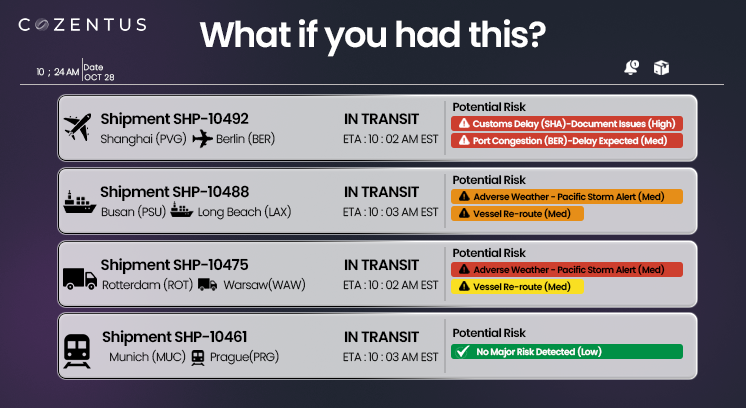
With real-time visibility platforms, you can see where your shipment is, but that’s about it. It tells you the current status, not what might go wrong next. Things like delays, congestion, or carrier issues are not really predicted. So, you’re informed, but not really prepared.
2. Alerts Come After the Problem Starts
Even real-time alerts come a bit late. They usually show up after something has already gone wrong. By then, the delay or disruption has already started, and you’re just trying to manage it instead of avoiding it.
3. No Actionable Recommendations
Most systems tell you there is a problem, but don’t really help beyond that.
You’re left figuring out:
- what to do next
- how to fix it
- which option is better
So, a lot of it still depends on manual decisions, which can slow things down.
4. More Data, But No Intelligence
There’s a lot of data, a lot of dashboards, but not always clear answers. You spend time looking at information, trying to make sense of it. But it does not always help you decide faster or better.
What Is Predictive Analytics in Supply Chain (Simple Explanation)
Predictive analytics in supply chain uses AI and data to forecast future risks, delays, and demand. Instead of just showing what is happening right now, it tries to answer what is likely to happen next based on patterns and signals.
It combines:
- Historical shipment data: Past delivery performance, delays, and route behaviour.
- Real-time logistics data: Current shipment location, movement, and status updates.
- External signals: Weather, traffic, and port congestion.
To answer critical questions like:
- Will this shipment be delayed?
- What is the risk level of this route?
- How should we optimize inventory?
All this data is processed using machine learning models that continuously learn and improve over time. So, the more data the system sees, the better it gets at predicting.
In simple terms, it is less about tracking and more about preparing. Instead of reacting when something goes wrong, you get a heads-up early enough to actually do something about it.
Reactive vs Predictive Supply Chain: What’s the Difference?
Most supply chains can see what is happening, but the real importance is how quickly they respond. Reactive models act after disruptions occur, while predictive models use data and AI to identify risks early.
Reactive Supply Chain (Traditional Model)
- Delay is identified after it happens: The system flags delays only after transit deviations occur, leaving very little time to prevent impact.
- Inventory levels drop before action is taken: Replenishment decisions are triggered only after stock falls below thresholds, increasing stockout risk.
- Disruptions handled only after they occur: Issues like port congestion or carrier delays are managed only after they start affecting operations.
Predictive Supply Chain (Modern Model)
- Delay is predicted before it happens: AI models analyze route, carrier, and external data to forecast potential delays in advance.
- Inventory shortages forecasted early: Demand patterns and supply signals are used to predict shortages before they impact availability.
- Risks identified in advance: Systems continuously monitor internal and external data to detect risks before they disrupt operations.
Benefits of Predictive Analytics in Logistics and Supply Chain
As supply chains become more data-driven, predictive analytics starts to play a bigger role in daily operations. It helps teams plan better, respond faster, and manage risks with more clarity.
1. Predict Shipment Delays Before They Happen
With AI-based delay prediction, companies can spot issues much earlier instead of waiting for alerts. This helps them:
- Identify risky shipments early
- Reroute before delays actually happen
- Inform customers ahead of time instead of at the last minute
So instead of reacting to delays, teams get some time to manage them better.
2. Improve Demand Forecasting Accuracy
Machine learning models look at past demand, trends, and patterns to make better forecasts. It might not be perfect, but it’s definitely more reliable than manual planning.
This helps businesses:
- Predict seasonal spikes more accurately
- Avoid stockouts during high demand
- Reduce excess inventory that just sits in warehouses
3. Reduce Supply Chain Disruptions
Predictive risk management helps in identifying issues before they become bigger problems.
Companies can:
- Anticipate things like port congestion or delays
- Keep track of supplier performance and risks
- Prepare backup plans in advance
So, when something goes wrong, it is not completely unexpected.
4. Optimize Routes in Real Time
AI can continuously analyze routes based on current conditions and past performance. This helps teams:
- Avoid traffic or congestion-heavy routes
- Reduce unnecessary fuel usage
- Improve delivery timelines overall
5. Enable Data-Driven Decision Making
Instead of relying on gut feeling or past experience, decisions are backed by actual data and predictions.
Leaders get clearer insights into what might happen next, which makes it easier to take the right call at the right time.
How AI Is Used in Supply Chain and Logistics (Real Use Cases)
Use Case 1: Predictive ETA (Estimated Time of Arrival)
AI models calculate accurate ETAs using:
- Historical delivery performance
- Real-time traffic
- Weather conditions
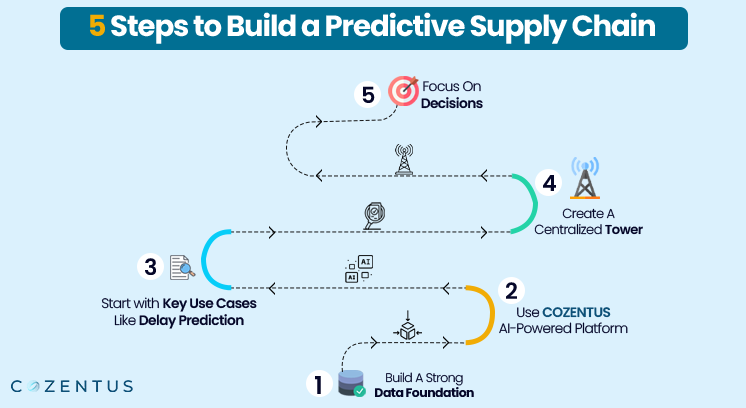
Use Case 2: Supply Chain Control Tower with Predictive Insights
Modern supply chain control towers combine:
- Visibility dashboards
- Predictive alerts
- Decision recommendations
Use Case 3: Inventory Optimization with AI
AI predicts:
- When will the stock run out
- Where inventory should be moved
- How much to reorder
Use Case 4: Risk Monitoring in Global Supply Chains
AI tracks:
- Geopolitical risks
- Weather disruptions
- Supplier performance issues
Challenges of Implementing Predictive Analytics in Logistics
1. Data Integration Issues
Data is often scattered across:
- ERP systems
- TMS platforms
- Carrier systems
2. Poor Data Quality
AI models are only as good as the data they receive.
3. High Implementation Complexity
Building predictive systems requires:
- Technology investment
- Skilled resources
- Time
4. Organizational Resistance
Teams used to reactive workflows may struggle to adopt proactive decision-making.
Conclusion: Top Supply Chain Leaders are Predicting Early. Are You?
Supply chains are quietly shifting. AI is no longer just giving insights, it is starting to predict issues early and even trigger actions before teams react. We are moving toward systems that can handle disruptions on their own, not perfectly, but enough to change how operations run.
At the same time, visibility has become standard. Everyone can track shipments now. That is not where the advantage is anymore.
The real difference is how early you can act. Can you see a delay coming and do something about it before it hits?
A lot of businesses are still relying on dashboards and manual calls. It works, but it slows things down. The ones pulling ahead are already using prediction to stay one step ahead.
Visibility was a big step.
But this next shift is already happening, with or without you.